
The Pleiadian star system, more accurately known as the Pleiades star cluster, is one of the most recognisable star groupings in the night sky. Located in the constellation of Taurus, it has been observed and recorded by cultures around the world for thousands of years. Beyond its astronomical significance, the Pleiades are also associated with symbolism, mythology, and modern interpretations connected to starseed origins. In this guide, you’ll explore the location, characteristics, and broader meaning of the Pleiadian star system from both observational and cultural perspectives.
Keep reading to discover how astronomy and spirituality intersect at the home of the Pleiadian starseeds.
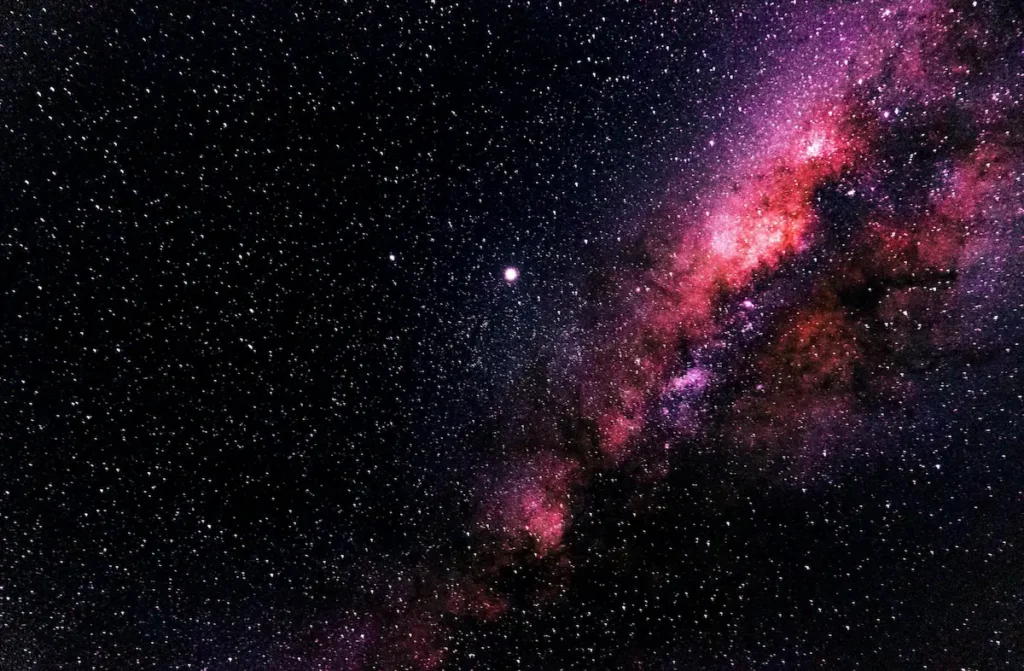
Pleiadian Star System Astronomical Overview
The Pleiadian star system is a bright, easily recognisable cluster located in the constellation of Taurus. At about 444 light-years from Earth, this star cluster forms a tight, luminous grouping that can be easily seen by the naked eye. As a result, the Pleiades, also known as the Pleiadian star cluster or Seven Sisters, has captured human attention for centuries. In addition to its beauty, the Pleiades has also provided countless insights into stellar formation and development.
The Seven Sisters—Alcyone, Maia, Electra, Taygeta, Asterope, Celaeno, and Merope—are the most prominent stars in the Pleiades cluster, each with its own unique characteristics. Most are classified as B-type or A-type stars, which gives them their bright blue-white color and contributes to the cluster’s distinctive glow. While they share a similar age of roughly 100 million years, each star differs slightly in size, brightness, and temperature. This offers astronomers a fascinating glimpse into the diversity and development of young stars. In turn, these properties make the Pleiades an ideal system for studying early stages of stellar evolution.
Lastly, the stars in the cluster interact through subtle gravitational forces, which influence their rotation and the movement of nearby planets. These interactions create a stable, harmonious system that reflects the inherent balance of the Pleiadian star system. In this way, the cluster serves as both a scientific model of cosmic order and of symbolic celestial harmony.

Discover Your Starseed Personality✨
Take our free quiz to discover your unique cosmic personality and gain clarity on your strengths, relationships, and soul mission. Unlock the starseed lineage that aligns with who you truly are.
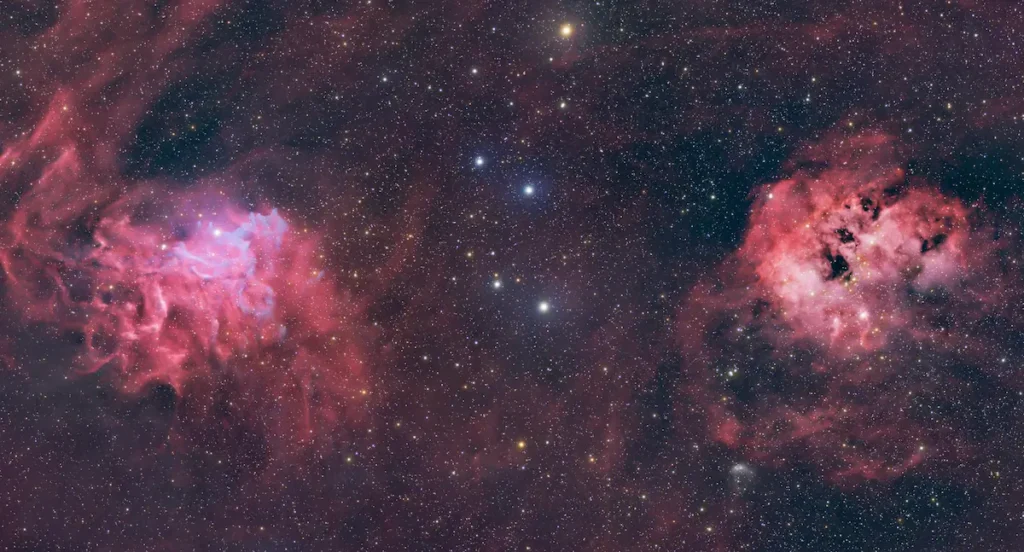
Planetary Habitability in the Pleiadian Star System
The Pleiadian star system provides an environment where planet formation is likely occurring. In particular, several stars in the cluster host debris disks, which indicate ongoing planetary formation. These discs also suggest that both rocky planets and larger gas giants may form around different stars within the cluster. Ultimately, it demonstrates that the processes necessary for building planetary systems are active even in this relatively young stellar environment.
At the same time, the cluster presents challenges for long-term planetary stability. Many of its brightest stars are massive B- and A-type stars, which have short lifespans and emit strong radiation. Furthermore, the Pleiades’ relatively young age, about 100 million years, means that planetary systems are still settling. This means that gravitational interactions between closely packed stars will continue to disrupt wider orbits. Smaller, more stable stars allow planets to survive more easily, while planets in wider orbits face a higher risk of ejection or destabilisation.
Consequently, modern astronomy concludes that while planets almost certainly exist within the Pleiadian star system, the likelihood of finding stable, Earth-like worlds is limited. High stellar activity, dynamic interactions, and the cluster’s youth all make long-term habitability less common than in older, more isolated star systems. Nevertheless, ongoing observations and future studies may identify planets in the cluster that exhibit the conditions necessary for life.

Significance of the Pleiades on Earth
The Pleiadian star cluster has held cultural importance across many ancient civilisations, appearing in myths, calendars, and navigation systems throughout history. Its prominence in the night sky made it a universal reference point for early humans, symbolising guidance, continuity, and alignment with natural rhythms. Specific cultural references include:
- Mesopotamia: The Pleiades were linked to agricultural cycles, helping guide planting and harvesting seasons.
- Ancient Egypt: The cluster featured in astronomical observations and ritual calendars, marking seasonal changes.
- Greek Civilisation: Known as the Seven Sisters, the Pleiades appear in mythology as the daughters of Atlas and Pleione, symbolising cosmic and human connections.
- Native American Tribes: Many tribes, including the Cherokee and Lakota, referenced the Pleiades in storytelling, seasonal markers, and spiritual guidance.
- Australian Aboriginal Cultures: The cluster appears in Dreamtime stories, often representing ancestral figures or important celestial events.
- Māori (New Zealand): Called Matariki, the Pleiades marked the Māori New Year and were used to signal agricultural and seasonal activities.
These examples demonstrate how the Pleiades influenced human understanding of the natural world, timekeeping, and cultural narratives across different regions and eras.
If you’re curious whether your connection to the Pleiades is personal, explore our article on the key signs of being a starseed.

Pleiadian Starseed Origins and the Seven Sisters
The Pleiadian star system hosts a cluster of highly advanced civilisations, with the Pleiadian starseeds as its most well-known members. Other groups also inhabit the system—some belong to the extended Pleiadian family, while others form distinct lineages. Moreover, several lineages are thought to be specifically related to the cluster’s seven main stars. These include Electrans from Electra and Alcyoneans from Alcyone. Together, they form a broader network of conscious civilisations in the Pleiades.
Furthermore, according to starseed teachings, the Pleiadians are thought to be ancient descendants of the Lyran civilisation. These Lyran settlers migrated to the Pleiades after cosmic conflicts within their constellation, also known as the Lyran wars. Subsequently, in the Pleiades, they established societies focused on harmony, light-based technologies, spiritual awareness, and cooperation rather than conquest.
Over time and through spiritual ascension, the Pleiadians developed advanced technologies, telepathic communication and inter-dimensional awareness. While some Pleiadians still inhabit physical planets within the cluster, most have ascended beyond the third dimension. They now guide, mentor, and teach as light-based beings rather than remaining in physical form.
Finally, Pleiadians also created starseeds—souls who choose to incarnate in human bodies. Many humans on Earth who identify as Pleiadian starseeds feel a strong soul‑level connection to the Pleiades. They believe they volunteered to come to Earth to help humanity shift into higher consciousness, following Pleiadian principles.
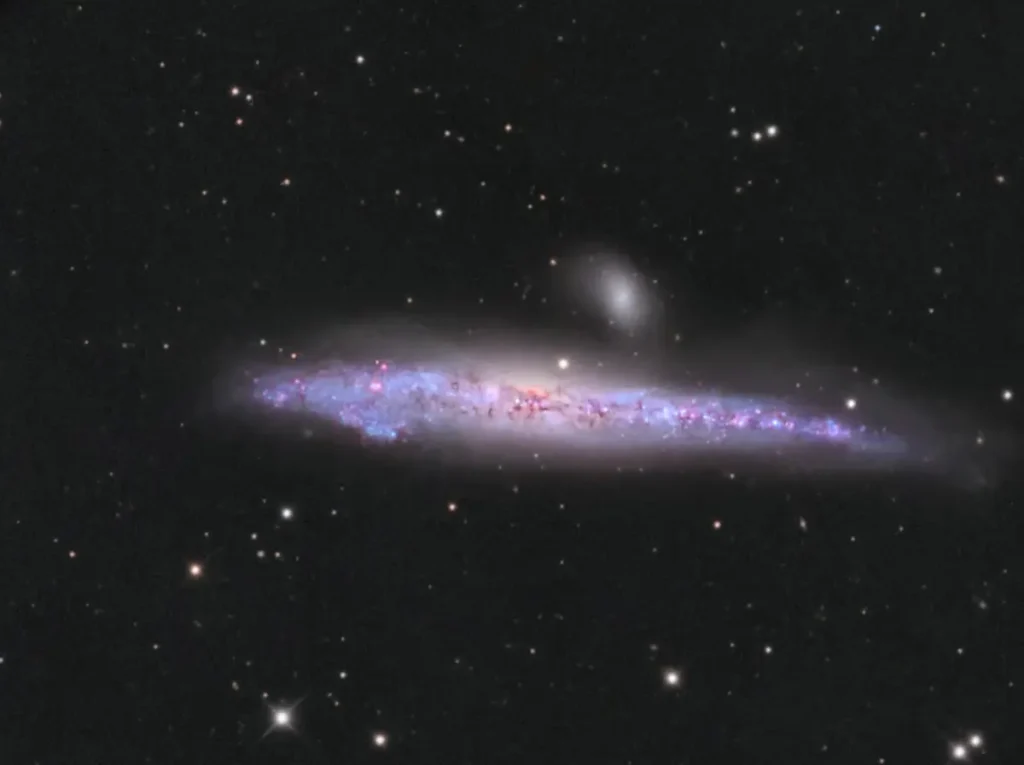
Channelled Appearance of the Pleiadian Home Planets
Descriptions of the Pleiadian homeworlds often portray them as visually striking and unique compared to Earth. Many starseed accounts suggest that these planets feature soft, luminous landscapes, with expansive skies and terrain that may appear in shades of pink, lavender, or other pastel hues. These colours appear to reflect the planets’ high vibrational energy and advanced atmospheric composition.
In addition to their distinctive colouration, Pleiadian planets are often described as having abundant natural beauty, with oceans, forests, and open spaces that support harmonious ecosystems. Unlike Earth, the environments are said to integrate seamlessly with advanced technologies, which are often non-intrusive and designed to work in harmony with the natural world.
To understand how the Pleiadian lineage relates to other starseed groups, you can continue with our comprehensive guide to all starseed types and origins.

FAQ: Pleiadian Star System
How many stars are in the Pleiades cluster?
The cluster contains over 1,000 confirmed stars. However, only seven of the brightest are typically visible to the naked eye.
Is it possible that each star in the Pleiadian star system has its own starseed lineage?
It is possible, but not highly probable. Just as it is unlikely that every planet in our solar system could support life, not every star in the Pleiades may host a starseed lineage. However, life and consciousness may exist in forms or dimensions that we cannot currently detect, so it is impossible to know for certain.
Is the Pleiades a star system or a star cluster?
The Pleiades is officially an open star cluster, not a single star system. Unlike a star system, which consists of one star and its planets, a star cluster is a group of stars that formed together and remain gravitationally bound.
Are all starseeds in the Pleiades star cluster part of the Pleiadians, or distinct lineages?
On this blog, we identify these groups as separate lineages while highlighting their close ancestral connection. It is helpful to think of them as cousins within the wider Pleiadian family, each associated with different stars in the cluster while still belonging to the same broader heritage.
What is the difference between a Pleiadian and a Pleiadian starseed?
A Pleiadian refers to a being who originates from the Pleiadian star system. They may currently exist in the cluster, or in higher dimensions. A Pleiadian starseed, by contrast, is a soul from the Pleiades who has incarnated on Earth. They seek to assist with consciousness raising, guidance, or spiritual evolution.
Cosmic Closure
The Pleiadian star system stands out as both a remarkable astronomical cluster and a central reference point in human culture and consciousness studies. Scientifically, it offers insight into stellar evolution, cluster dynamics, and the potential for planetary formation, even if fully habitable worlds remain unlikely. Culturally, the cluster has shaped myths, calendars, and storytelling across civilisations worldwide. Spiritually, the Pleiades is home to an advanced civilisation, which continues to influence the evolution of humanity through starseeds. Together, these perspectives highlight the Pleiades as a system of significance in astronomical, cultural and spiritual circles.
To learn more, see the other articles in this series on Pleiadian history, starseed origins, and lineage differences.
- What Is a Pleiadian Starseed? Understanding the Origins
- Best Crystals for Pleiadian Starseeds: Top 10 Picks
- Pleiadian Characteristics: 8 Traits You May Recognise
Curious which starseed you are? The Starseed Personality Assessment gives you 12 insightful questions to explore your natural traits and dominant lineage — completely free.