
Smudging with sage is one of the most widely known ways to clear the energy of a space, and also one of the most misunderstood. At its heart, it is a simple act of burning dried sage and guiding the smoke with intention. Yet the practice comes from sacred Indigenous ceremony, and the sage most often sold for it faces real pressure in the wild. Knowing both sides helps you learn how to smudge with sage in a way that feels meaningful and respectful. This guide explains what smudging with sage is, where it comes from, and how to choose your sage with care. It then walks through the steps for your home and yourself, what to say, the rules to follow, and how sage pairs with other cleansing tools.
Let’s begin with what smudging actually is.
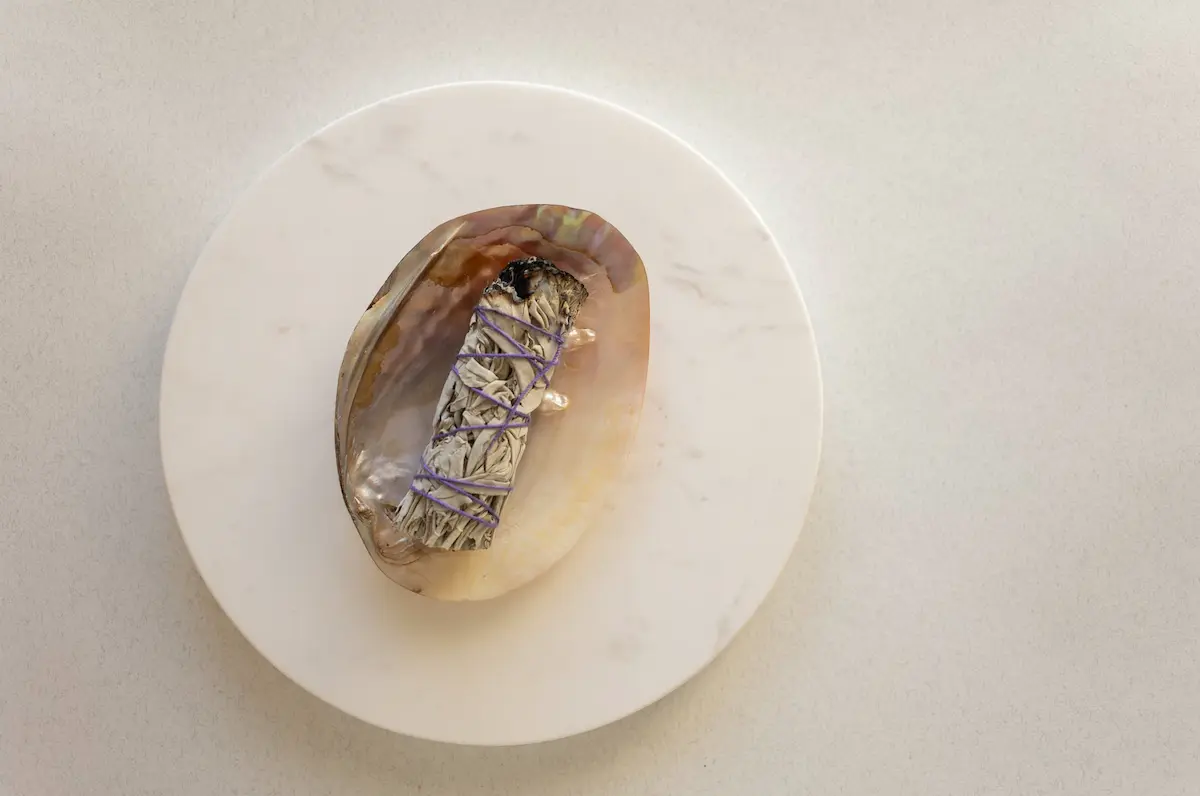
What Is Smudging With Sage?
Smudging with sage is the practice of burning dried sage and guiding its smoke through a space, over a person, or around an object to clear energy and set an intention.
The idea behind it is that spaces and people can hold on to heaviness, whether from stress, conflict, or simply the wear of daily life. As the sage smoulders, its smoke is believed to carry that heaviness away, leaving room for something calmer to settle. Many people smudge when moving into a new home, after an argument, before meditation, or at the close of a difficult chapter. For others, it is simply a way to pause and be present for a few minutes. In Indigenous traditions, smudging is also a sacred act of prayer and purification, with teachings passed down through generations. Outside those traditions, the same basic act is often called smoke cleansing, a broader term for burning herbs or resins with intention. This guide uses both terms and treats the practice as something to approach with care, not as a quick routine.

Which Starseed Are You?✨
The rituals you feel drawn to can say a lot about your energy. Take the free Starseed Personality Quiz for 12 insightful questions that reveal your natural traits and dominant lineage in just a few minutes.
Where Does Smudging Comes From?
Smudging is rooted in the ceremonies of many Indigenous peoples across North America, though not every nation uses the word itself. These traditions burn sacred medicines such as sage, sweetgrass, cedar, and tobacco, each with its own purpose. In Anishinaabe teaching, for example, smudging connects people with the Creator, cleanses the spirit, and brings clarity to the mind, and it is always voluntary. For many years, these ceremonies were suppressed in both Canada and the United States, until the American Indian Religious Freedom Act of 1978 formally protected them in the US. That history is one reason many Indigenous people ask others to approach smudging with care. Burning plants with intention also appears in other cultures, from church incense to Hindu fire rituals. Many people today draw on this wider practice of smoke cleansing while still honouring smudging’s specific roots.
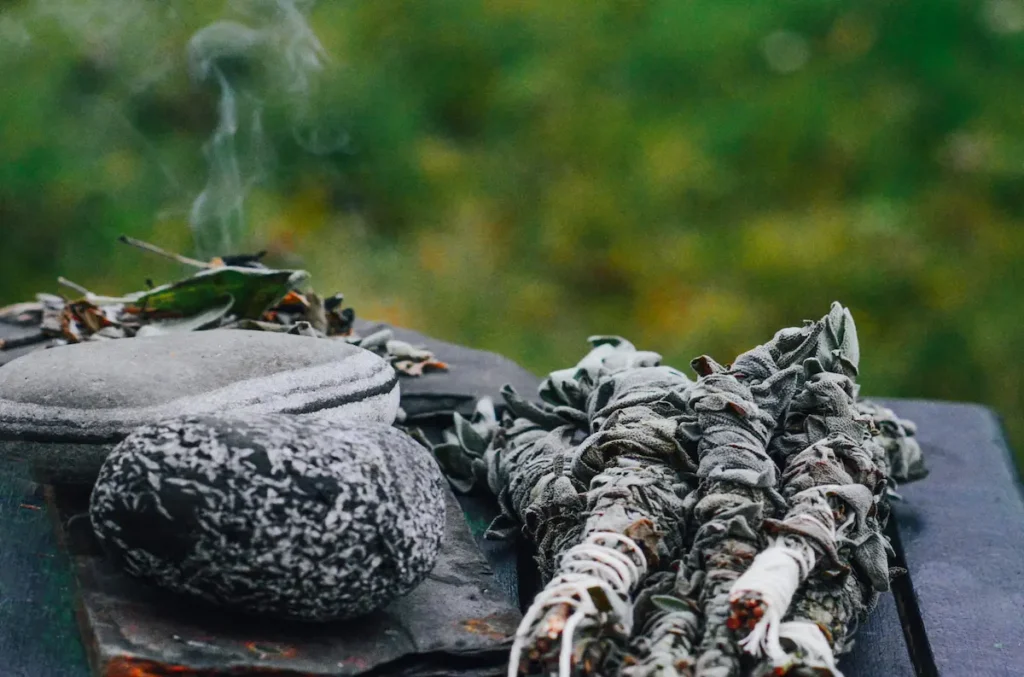
Choosing Your Sage Respectfully
White Sage and Over-Harvesting
White sage is the herb most often sold for smudging, and it grows wild only in Southern California and northern Baja California. Its popularity has made it a target for poachers, with hillsides stripped to meet global demand. In 2018 alone, police in Rancho Cucamonga, California, seized 400 pounds of illegally harvested white sage. The plant is also sacred to several Indigenous peoples of the region, and many Native Americans have asked others to stop using it. If you still choose white sage, look for bundles grown on named, cultivated farms, and avoid anything labelled wild-harvested or foraged.
Other Types of Sage
Garden sage, the common kitchen herb, burns well and carries a warm, earthy scent. It is easy to grow at home, which makes it one of the most sustainable choices. Desert sage and prairie sage are also sold for cleansing, though both are types of sagebrush rather than true sage. Their smoke is lighter and slightly sweeter.
Alternatives Worth Trying
Many people find that other herbs serve the same purpose just as well. Lavender is linked with calm and rest, which makes a sage and lavender bundle a popular choice for bedrooms. Rosemary is associated with clarity and protection, and juniper with cleansing and renewal. Each can be dried in small bundles and burned the same way as sage, so the method in the next section works for all of them.
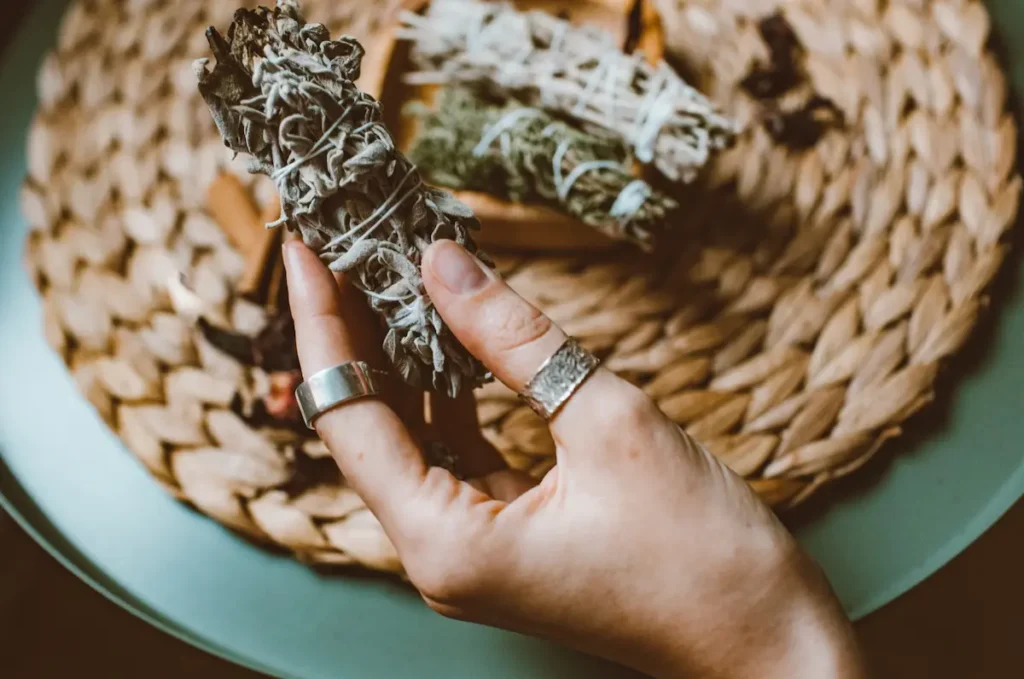
How to Smudge With Sage: Step by Step
Smudging with sage is simple once you know the basics, and a first session needs only a few minutes. Gather what you need before you light anything, so you can stay focused once the smoke begins.
What You’ll Need to Smudge With Sage
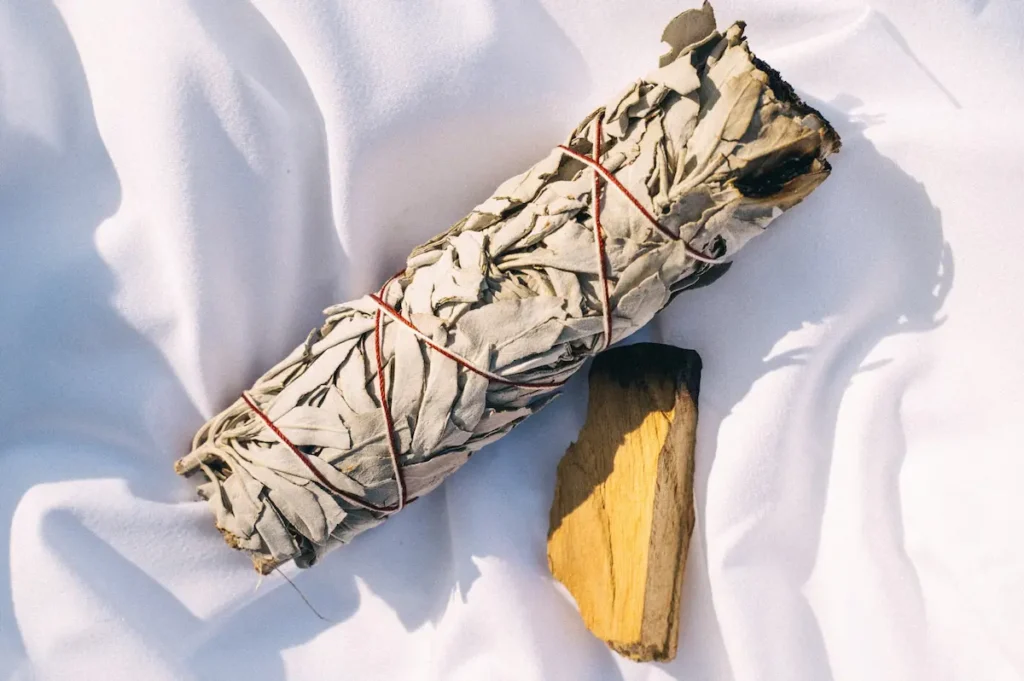
- Sage: A tied bundle, sometimes called a smudge stick, or a handful of loose dried leaves.
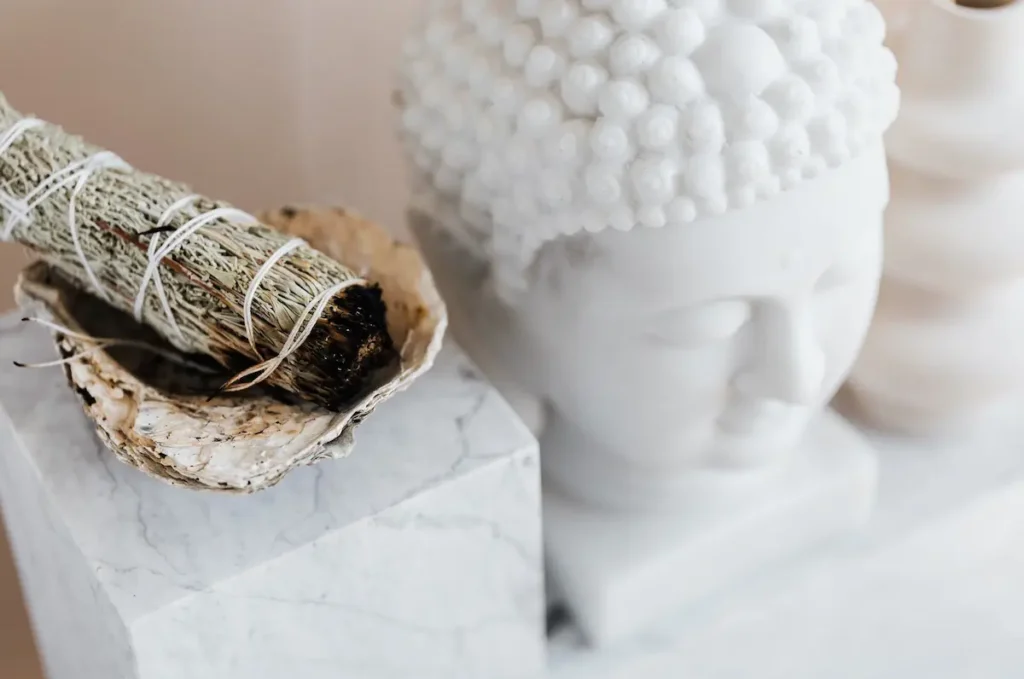
- A fireproof dish: An abalone shell, a ceramic bowl, or a small clay pot to catch falling embers and ash.
- A flame: A candle, match, or lighter. A candle gives a steadier light for a tightly packed bundle.
- Sand or soil: A small bowl of either, for putting the sage out safely at the end.
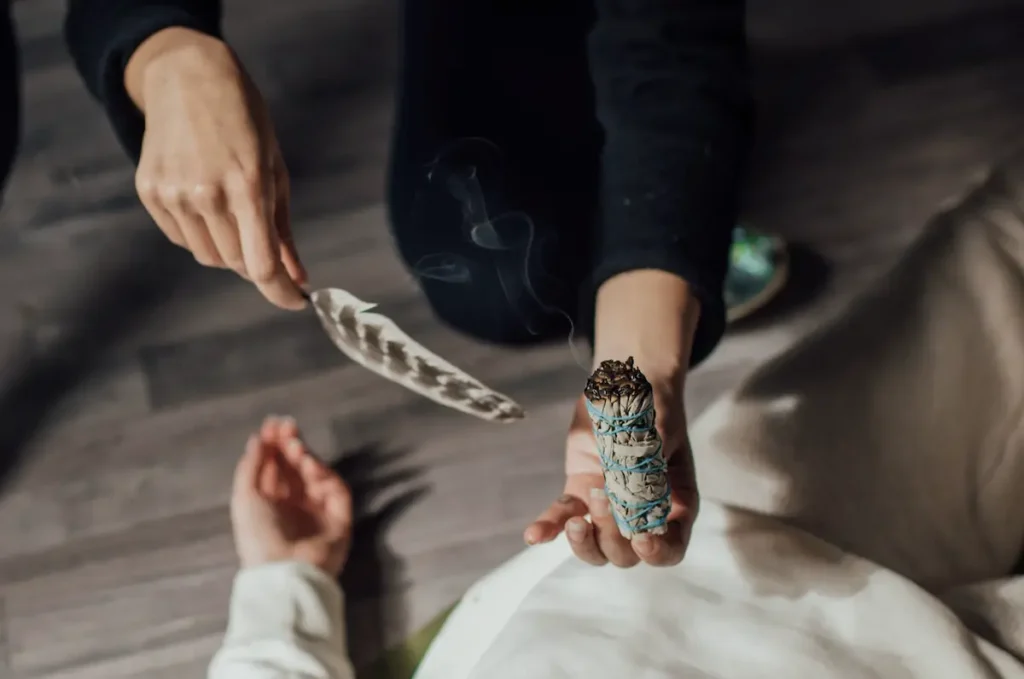
- A feather (optional): Useful for guiding the smoke, though your hand works just as well.
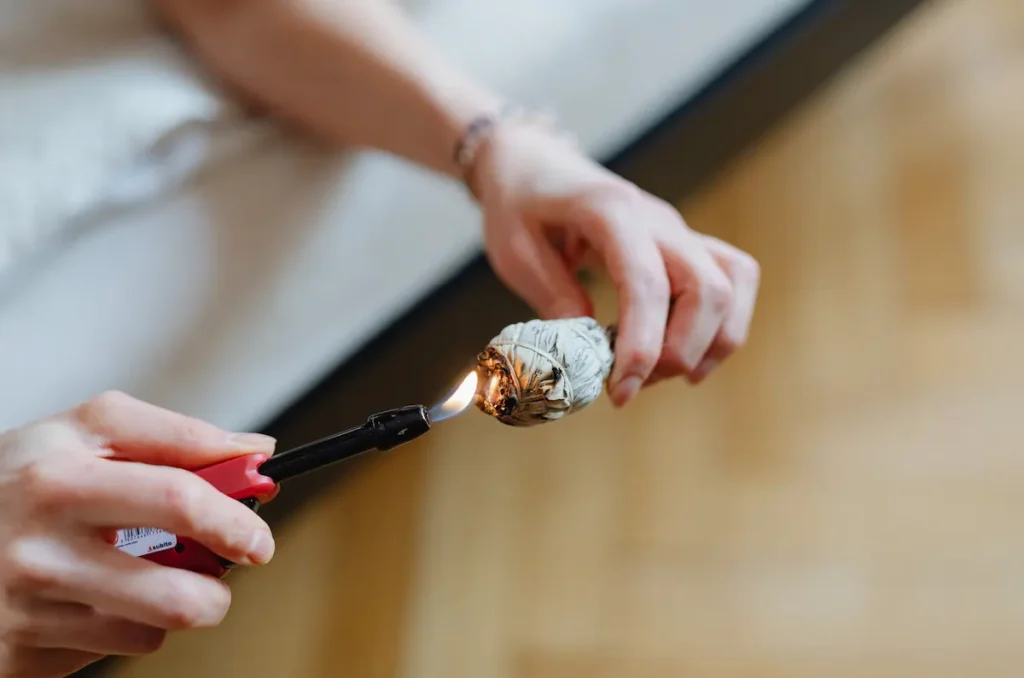
7 Steps to Smudge With Sage
1. Open a window or door. Fresh air gives the smoke somewhere to go and keeps the room comfortable.
2. Set your intention. Take a breath and decide what you want to clear or welcome, such as calm after a stressful week.
3. Light the tip. Hold the end of the bundle in the flame for a few seconds until it catches. For loose leaves, light a small pinch in your dish.
4. Blow out the flame. The sage should glow and smoulder, releasing a steady stream of smoke rather than burning with a flame.
5. Guide the smoke. Hold the dish beneath the sage to catch embers, and use your hand or a feather to move the smoke where you want it.
6. Relight if needed. Tightly bound bundles often go out partway through, so simply light the tip again and continue.
7. Put it out safely. Press the lit end firmly into sand or soil until no smoke remains, which keeps the bundle dry for next time.
Once the sage has cooled, many people return the ashes to the earth by scattering or burying them. A first session can be as short as five minutes, and most people find their own rhythm with practice.
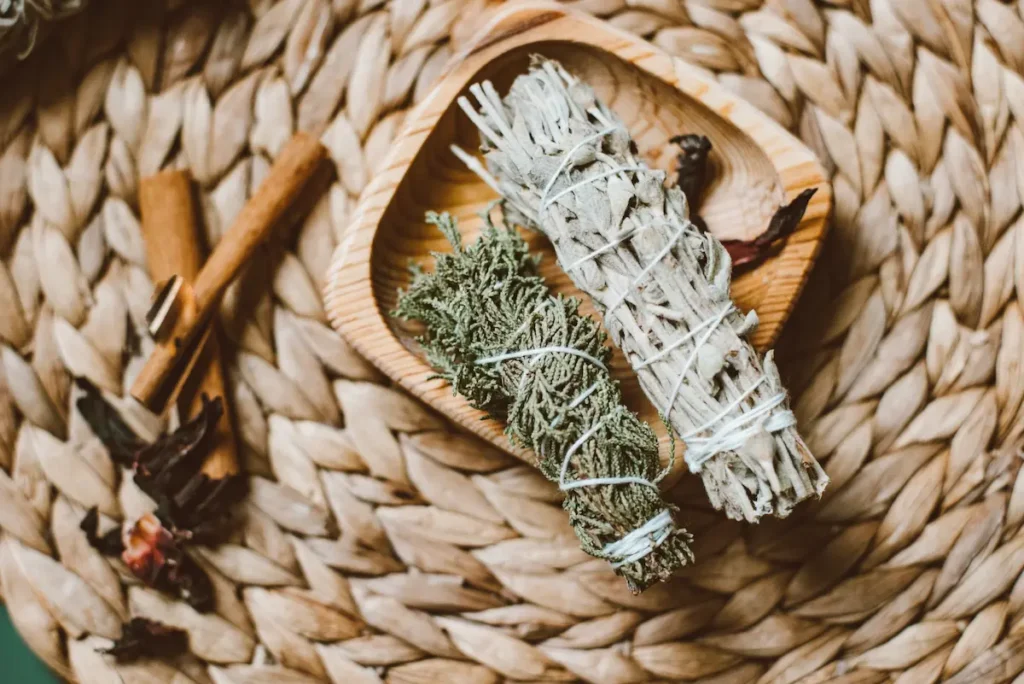
How to Smudge Your Home With Sage
Smudging a whole home follows the same steps, simply carried from room to room. Many people begin at the front door, since it is the main point where energy is thought to enter and leave. From there, move through the home in a clockwise direction, or work from the lowest floor upwards if you have more than one level. Open a window in each room as you go, so the smoke has a clear way out.
In each room, a few places tend to need more attention than others:
- Corners: Energy is often described as gathering where walls meet, so hold the smoke in each corner for a few moments.
- Doorways and windows: These are seen as thresholds between spaces, so trace the smoke slowly around their frames.
- Closets and cupboards: Open them briefly and let a little smoke drift inside.
- Beds and seating: Pass the smoke over the places where people rest, talk, and spend the most time.
Move at an unhurried pace, and pause anywhere that feels heavier than the rest of the room. When every room is done, return to the front door and finish where you began. This simple loop is often described as closing the cleanse. Finally, some people follow a sage smudge with salt, a pairing found in many folk traditions. A small bowl of salt placed in each room, or a light line along the inside of the front door, is believed to help hold the clearer energy in place. Sweep or discard the salt after a day or two.
For starseeds who want turn a cleansed corner into a sacred space, see our guide to building a starseed sanctuary at home.
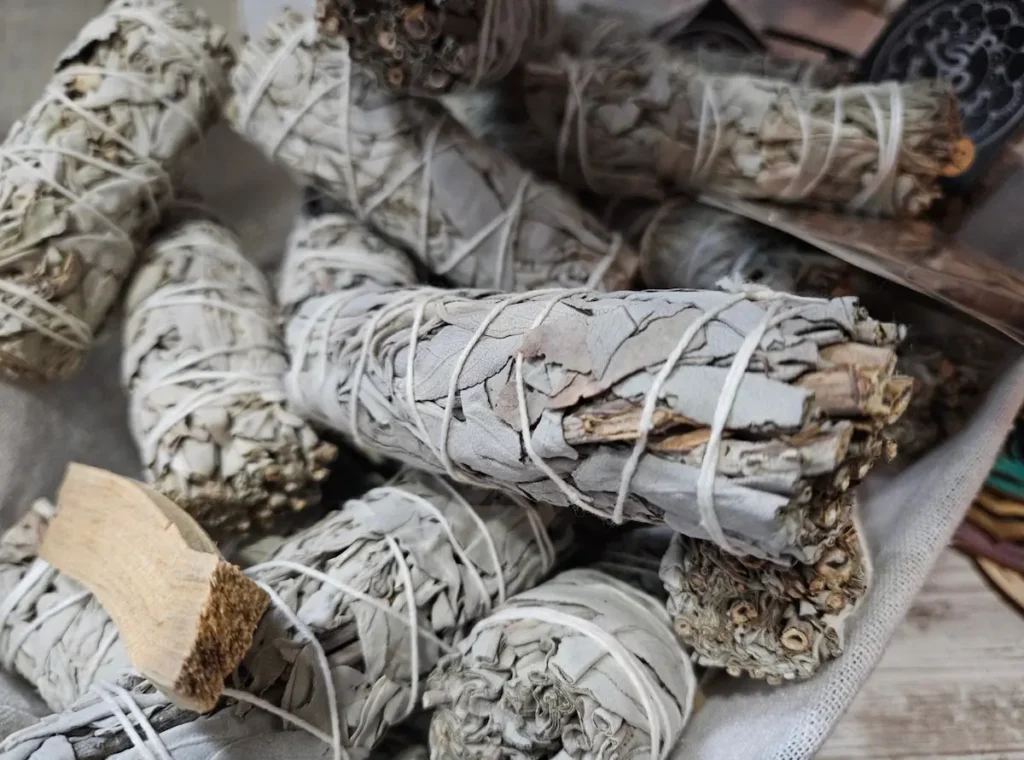
Clearing Your Energy and Belongings With Sage
How to Smudge Yourself With Sage
Smudging yourself is often done at the start or end of a day, after a hard conversation, or before meditation. Light your sage as usual and hold the dish in one hand. Begin by drawing the smoke over your hands, as if washing them, then guide it slowly over your head, face, and heart, and down the body towards your feet. Many traditions give each area its own meaning. One Anishinaabe teaching, for example, links the mind with good thoughts, the eyes with seeing the good in others, and the feet with walking a good path. Even without these teachings, moving the smoke with attention turns a few minutes into a calm, grounding pause.
How to Smudge Objects and Crystals With Sage
Objects can be smudged in the same way, especially items that are new, second-hand, or used in ritual. Hold the object in the smoke for a few moments, or pass it through the smoke several times while keeping your intention in mind. Crystals respond well to this method too, since smoke is one of the gentlest ways of cleansing and charging crystals and suits almost every stone. Jewellery, tarot or oracle decks, and items on an altar are also commonly smudged before first use. Many people return to them whenever they begin to feel heavy, giving each piece a fresh start alongside the space around it.

Is Your Energy Echoing the Stars? ✨
Some believe the energy we carry reflects where our souls began. Starseed Origins is a 166-page reference covering 40+ starseed types, with detailed profiles on origins, traits, appearance, and energy for each.
What to Say When You Smudge With Sage
There is no required script for smudging. In many Indigenous traditions, prayers spoken during a smudge are personal or passed down within a community, so they are not something to copy. For your own smoke cleansing, simple words in your own voice tend to work best, spoken aloud or held silently.
A few examples to adapt:
- For your home: “May this space be clear, calm, and welcoming to all who enter.”
- For yourself: “I let go of the weight of today and return to what matters most.”
- For a new beginning: “I close this chapter with thanks and make room for what comes next.”
- For gratitude: “Thank you to this plant and to the earth that grew it.”
Many people repeat a single phrase as they move from room to room, which keeps their attention steady. Others simply name one quality they want to invite, such as peace, clarity, or rest. Whatever you choose, sincerity matters far more than the exact wording.
Smudging Rules and Safety
Smudging has no single rulebook, but a few principles come up again and again. Some are about respect, and others are about fire and smoke.
Rules of Respect
- Keep it voluntary: Smudging is never forced, so ask before smudging another person or a shared space.
- Source with care: Choose cultivated sage or a homegrown alternative, as covered earlier in this guide.
- Honour the ceremony: Indigenous smudging ceremonies are led within their communities. Join one only when invited, and follow the guidance of those leading it.
- Treat the plant with thanks: Many people offer a word of gratitude before lighting and return the ashes to the earth afterwards.
Fire and Smoke Safety
- Never leave sage unattended: Even a smouldering bundle can reignite, so stay with it until it is fully out.
- Use a fireproof dish: Keep it beneath the sage at all times, well away from curtains, paper, and fabric.
- Ventilate the room: Open a window or door before you begin, and keep sessions short in small spaces.
- Mind your smoke alarm: Smoke can set it off, so work away from the detector rather than disabling it.
- Protect children and pets: Keep them out of the room while you smudge, especially birds, which can be sensitive to smoke.
- Offer smokeless options: For anyone sensitive to smoke, a sage spray, sound, or fresh air can serve a similar purpose.
Combining Sage With Other Cleansing Tools
Sage is often used alongside other tools, either in the same session or as part of a wider routine. Many people build a small set of spiritual tools over time, choosing each for a slightly different purpose.
- Palo santo: Its sweet, woody smoke is linked with inviting positive energy in. Many people burn sage first to clear a space, then follow with palo santo.
- Sweetgrass: In several Indigenous teachings, sweetgrass is burned to welcome good energy after a cleansing. It is a sacred medicine in its own right, so source it from Indigenous or ethical growers.
- Sage incense: Incense sticks infused with sage burn steadily and produce lighter smoke than a bundle. They suit small spaces or anyone who finds a full smudge too strong.
- Sage spray: A mist made from water and sage essential oil offers a smoke-free option. It works well in shared homes, offices, or anywhere an open flame is not allowed.
- Sound: A bell, singing bowl, or a few claps after smudging is believed to help settle the space once the smoke has cleared.
With your space cleared, it may be time to look at your own energy. A personalised Starseed Energy Profile explores what is shaping your path right now.
FAQ: How to Smudge With Sage
How often should you smudge with sage?
There is no set rule. Many people smudge when moving into a new home, after an argument or illness, or at the start of a new chapter. Others prefer a weekly or monthly rhythm. Because white sage is under pressure in the wild, smudging only when it feels meaningful is also a more respectful choice.
Does burning sage really kill bacteria?
This popular claim usually traces back to a 2007 study that found burning herbs reduced airborne bacteria. That study burned havan sámagri, a Hindu herbal mixture, rather than sage. No high-quality research has shown that sage smoke disinfects the air, so smudging is best understood as a spiritual practice, not a cleaning method.
Is it okay for non-Indigenous people to smudge?
Views differ. Many Indigenous people ask others to avoid white sage and never to imitate their ceremonies, while some welcome respectful smoke cleansing with other herbs. Learning the origins, sourcing ethically, and choosing alternatives such as garden sage or lavender is a thoughtful middle path.
Can you reuse a sage bundle?
Yes. A single bundle usually lasts for several sessions. Put it out fully in sand or soil after each use, let it cool, and store it somewhere dry. If the tip becomes charred and hard to light, gently trim or crumble away the burnt end before relighting.
How long should a smudge last?
A single room can take just a few minutes, while a whole home may take 15 to 30 minutes. Shorter sessions are often enough, especially in small spaces. When the space feels lighter, or your intention feels complete, it is fine to stop.

Final Thoughts
Knowing how to smudge with sage requires very little: a bundle, a flame, and a few minutes of attention. What gives it meaning is everything around those simple steps. The intention you set, the care you take in choosing your sage, and the respect you show for the practice’s roots all shape how the ritual feels. Smoke rising through a room can mark the end of a hard week, the start of a new home, or simply a pause in an ordinary day. Every bundle also carries the story of the land it grew on and the people who first understood it. Choose your sage with care, light it with purpose, and let each session leave your space, and yourself, a little clearer than before.