
Whether you’re just beginning your spiritual journey or looking to deepen your connection with your higher self, having the right tools can profoundly enhance your spiritual awakening. From crystals and sound healing to journaling, light codes, and aura photography, these practices act as gateways to higher vibration and inner alignment. In this guide, we’ll cover 25 essential spiritual tools, along with practical guidance on how to use each one effectively.
Keep reading to discover the tools that truly call to you.

Why Are Spiritual Tools Important for Awakening?
Most people on a spiritual awakening path share a common goal: developing a deeper connection to their intuition, higher self and inner wisdom. This connection allows us to receive subtle guidance, insight and clarity as we navigate our lives and purpose. However, the majority of us are also shaped by a fast-paced, logic-driven world. In fact, our minds aren’t naturally attuned to receiving this kind of subtle communication. Instead of clear, direct messages, we tend to receive thoughts, feelings, intuitions, and gentle energetic shifts. For those unaccustomed to tuning in, this process can take time, even years, to develop. By consistently using spiritual tools, you can accelerate this connection, sharpen your awareness and navigate your spiritual awakening with greater ease.

25 Essential Spiritual Tools for Awakening
1. Meditation
Meditation quiets the mind and brings you into a receptive state for intuitive insight. Rather than trying to eliminate thought entirely, most approaches focus on gently observing the mind without attachment. In turn, this allows subtle awareness to rise to the surface. Expect more inner calm, clearer thinking and an easier time sensing energy shifts around you with regular practice.
Moreover, there is also no single “correct” way to meditate, with styles ranging from guided visualisations and mantra repetition to fully silent, unstructured sitting. For example, focusing attention on the third eye is a popular technique among those seeking deeper clarity or intuitive connection, though it isn’t necessary for beginners. Repetitive physical movement, like walking, swimming, or running, can also produce a meditative state. In fact, it offers an excellent accessible alternative for those who find stillness difficult at first.
Try This: Experiment with a few different styles to find what genuinely suits you, rather than forcing a method that feels unnatural. If seated stillness feels challenging, try a long walk or swim instead. Simply let your mind wander without an agenda and see where you get.
Ready to put this into practice? Explore our guide to starseed meditation techniques for specific methods to try.
2. Crystals
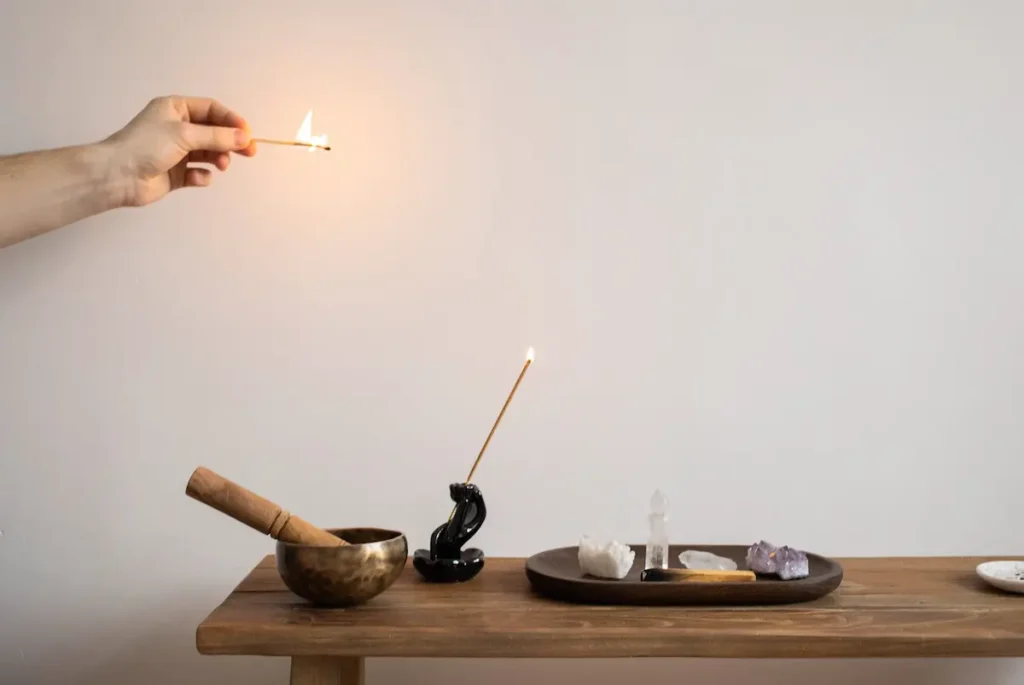
Crystals act as energy amplifiers and stabilisers, each carrying its own vibrational frequency shaped by its mineral composition and structure. Working with them can help you balance chakras, set intentions, and hold steady vibrations during meditation or healing sessions. This makes them one of the most accessible entry points into any practice for spiritual awakening.
Different crystals are also generally associated with different qualities. For example, rose quartz often assists with love and emotional healing, whilst black tourmaline with protection and grounding. Nonetheless, many people also choose a crystal intuitively. They often pick up whichever one they feel physically drawn to, rather than selecting purely based on traditional meanings. Over time, some crystals may also need periodic cleansing, through sunlight, moonlight, sound, or smoke, to clear any energy they’ve absorbed.
Try This: Choose a crystal that resonates with you and hold it during meditation or journaling. Pay attention to any tingling on your skin, a subtle lightness in the room, or an emotional shift as you sit with it. Sometimes its effect only becomes clear later, once your intention begins to quietly manifest in daily life.
Which Starseed Are You?✨
Your choice of crystals may be one clue, but it’s rarely the whole picture. Take the free Starseed Personality Quiz for 12 insightful questions that reveal your natural traits and dominant lineage in just a few minutes.
3. Chakra Balancing
Chakra balancing works with the seven main energy centres believed to run along the body, from the base of the spine to the crown of the head. Each chakra is associated with specific physical, emotional, and spiritual themes. For example, the throat is believed to be connected with communication, whilst the solar plexus with confidence and personal power. When these centres are balanced, energy is thought to flow more freely, supporting both emotional wellbeing and physical vitality.
In light of this flow of energy, blockages can also show up in unexpected ways. These can include recurring physical tension, or emotional patterns that seem to repeat without an obvious cause. They can even appear as a persistent sense of being “stuck” in one area of life. Many practitioners use colour, sound, or visualisation to address a specific chakra, matching the technique to whichever centre feels most restricted at the time.
Try This: Lie comfortably and visualise a vibrant light in the colour of the chakra connected to where you feel blocked or restricted. Place a hand gently on that area of your body for a physical anchor, or use a crystal of the corresponding colour, such as green for the throat, to strengthen the effect.
4. Sound Healing
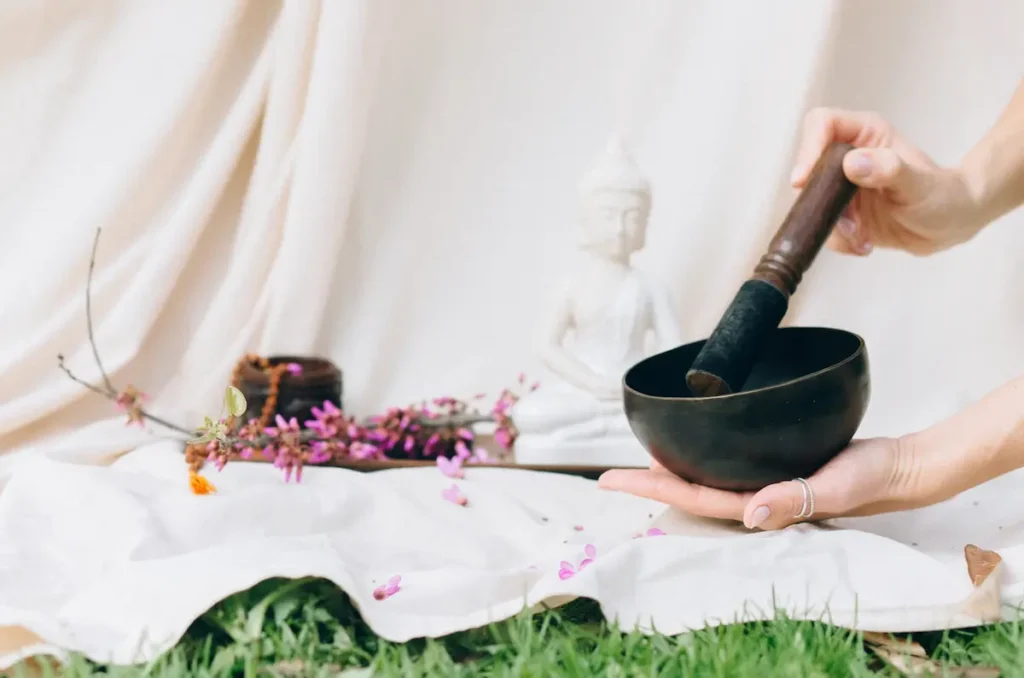
Sound healing uses instruments like singing bowls, tuning forks, and chimes to create vibrations that help break up stagnant or stuck energy in the body. Unlike more active practices, sound healing is largely passive. You sit or lie comfortably and receive the vibration, making it especially accessible for people who find meditation or visualisation difficult to sustain.
Sessions are also typically conducted by a practitioner, often in a group setting and can last anywhere from 30 minutes to several hours. Many people report entering a deeply relaxed, almost trance-like state during a session, sometimes losing track of time entirely. The specific tones and frequencies used are often chosen to correspond with particular chakras or emotional states. This adds a particular layer of intentional targeting to the spiritual awakening experience.
Try This: Book yourself a private or group sound healing session with a practitioner, ideally one experienced in the specific instruments they use. While recordings can offer a partial experience at home, in-person sessions allow the vibration to be felt physically, not just heard. Arguably, this is often one of the most meaningful parts of the practice.
5. Sound Frequencies
Sound frequencies, often referred to by their specific hertz measurement, are believed to entrain the brain and body toward particular states of awareness, relaxation, focus, or heightened intuition. This concept draws on the idea of resonance, that sustained exposure to a specific frequency can gradually shift your own vibrational state to match it.
Furthermore, certain frequencies have become popular within spiritual communities for specific purposes. For example, some are associated with deep relaxation, others with clarity or emotional release. Unlike sound healing sessions, which are typically guided by a practitioner, working with frequencies is something you can do independently, using pre-recorded tracks at home. This makes it one of the more low-effort, accessible spiritual awakening tools on this list.
Try This: Search for a specific frequency aligned with what you’re seeking, relaxation, focus, or emotional release. YouTube is an excellent place to start, and you can play it during meditation or as background support for other spiritual practices. Give it your full attention at least once, rather than only using it passively in the background.
What’s Shaping Your Path Right Now?✨
Beyond the tools and practices lies a deeper question: what energy are you actually working with, right now? Drawing on starseed wisdom, a personalised Energy Profile reveals what’s currently influencing your path—insight most people never think to ask for.
6. Numerology
Numerology interprets the numbers already present in your life, particularly your birth date and full name, to uncover recurring themes, lessons and patterns. Here, each number is believed to carry a distinct vibrational meaning. For example, calculations like your Life Path number are thought to offer insight into your core purpose, natural tendencies and even recurring challenges you’re likely to face.
Furthermore, this practice tends to appeal strongly to those who want something more structured or evidence-based than pure intuition. This is because it’s rooted in a calculable, repeatable system rather than subjective feeling. That said, interpretation still plays a significant role, the same numbers can be read slightly differently depending on the tradition or practitioner you follow.
Try This: Use an online numerology calculator to quickly generate your key numbers, saving yourself a considerable time compared to calculating manually. From there, research what each number means in the context of your specific life path, personality, and current circumstances.
For starseeds specifically, certain numbers are believed to carry added significance. Our guide to starseed numerologyexplores this in more depth.

7. Astrology
Astrology maps the positions of celestial bodies, the sun, moon, and planets, at the exact moment of your birth. With that, it reveals patterns believed to shape your personality, relationships and life timing. A full birth chart goes well beyond a sun sign, incorporating your rising sign, moon sign and planetary placements across twelve houses, each representing a different area of life.
Because a complete chart involves so many interacting variables, many people find it more approachable to work with an experienced astrologer rather than attempting to interpret one independently. Astrology can also highlight timing, periods when certain planetary movements are believed to align with significant change, opportunity, or challenge in your life.
Try This: Take the time to find a practitioner whose interpretive style you genuinely resonate with. Note that styles vary considerably between traditional, evolutionary, and psychological astrology. If working independently, start with just your sun, moon and rising signs before attempting a full chart reading.
Astrology maps themes and timing, but some believe your soul carries a specific origin too. Our guide to 40+ cosmic lineages explores this framework directly.
8. Energy Clearing Tools
Energy clearing tools, including sage, palo santo, incense, or clear quartz, are used to remove stagnant or heavy energy from a space or from your own aura. The idea is that just as physical spaces accumulate dust, they also accumulate subtle energetic residue from stress, conflict, or simply everyday life. As such, this residue can quietly affect mood and focus over time, even hindering spiritual awakening.
Smoke-based clearing, often called smudging, is one of the most traditional approaches, though it isn’t the only option. Sound (such as a bell or clap), certain crystals, and even fresh air and natural light can serve a similar clearing function for those sensitive to smoke or scent. In fact, many people incorporate energy clearing as a regular ritual. This includes before meditation, after an argument, or simply when a space starts to feel “heavy.”
Try This: Experiment with different clearing methods to find what genuinely feels effective for you, rather than assuming smoke-based options are required. If incense feels too strong, try a citrus-scented candle, a few minutes of fresh air, or a simple hand-clap around the room instead.

9. Sacred Spaces
A sacred space is a dedicated physical area set aside specifically for spiritual practice, meditation, ritual, or even quiet reflection. Unlike the rest of your home, which serves many competing purposes, a sacred space carries a single, consistent intention. Over time, having a space like this can make it easier to enter a receptive, focused state as soon as you transverse your spiritual awakening.
With that, the space doesn’t need to be elaborate or large. Even a small corner with a single meaningful object, a candle, a crystal, or a piece of art, can function as a sacred space, provided it’s used consistently and intentionally. Many people find that visual elements alone, like soft lighting or a calming colour palette, meaningfully raise the felt energy of a space, even without any active ritual taking place.
Try This: Dedicate a small, consistent corner of your home to whatever colour, scent, or object you find most soothing. If you’re unsure where to start, adjusting lighting, through a soft lamp, candles, or a salt lamp, is one of the simplest and most immediate changes you can make.
10. Grounding Practices
Grounding practices, such as walking barefoot, taking a salt bath, or spending time in nature, are designed to draw excess or scattered energy back down into the body. Spiritual work can sometimes leave people feeling ungrounded or overly heady, more attuned to subtle energy than to the physical present moment. Grounding helps restore that balance, strongly aiding in your overall spiritual awakening.
Direct physical contact with the earth, sometimes called “earthing,” is one of the most commonly recommended techniques. It is based on the idea that the earth itself carries a stabilising, neutralising energy ideal for spiritual awakening. Beyond nature-based methods, grounding can also come from simple sensory anchoring. Examples include focusing on the physical sensation of your feet on the floor, or the weight of your body in a chair. When your energy is well-grounded, you tend to be more receptive to subtle insight, rather than overwhelmed by it.
Try This: Increase your direct contact with natural elements wherever possible, grass underfoot, sand between your toes, or water on your skin. In colder climates, saunas, steam rooms, or even a warm bath can offer a similar grounding effect through temperature and physical sensation.
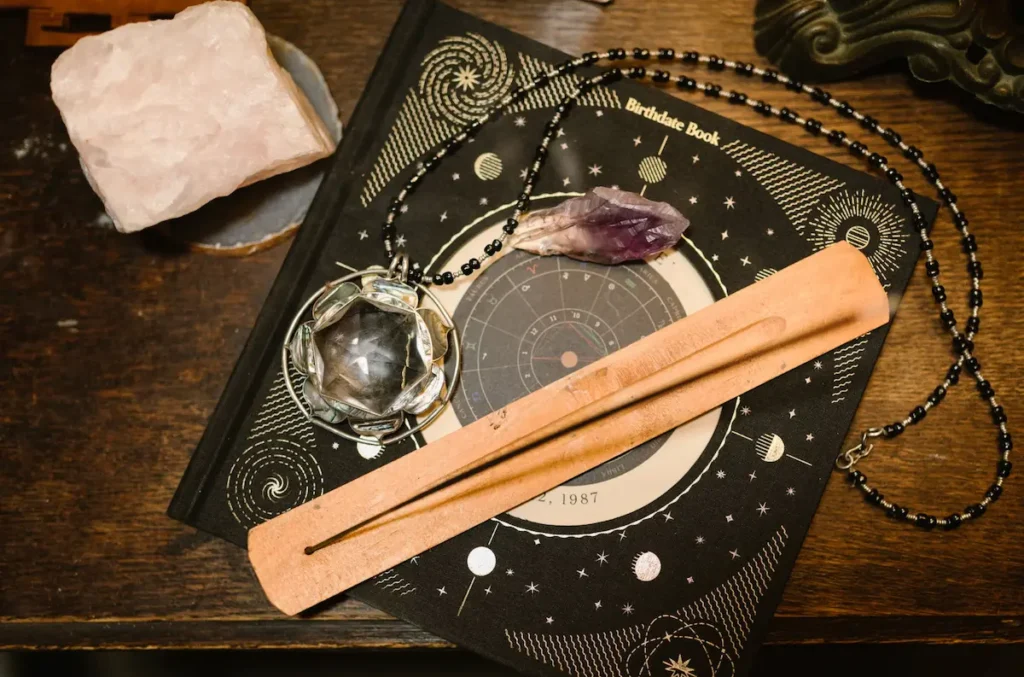
11. Journalling
Journalling anchors subtle thoughts, feelings, and intuitive impressions into physical form. As such, it transforms fleeting insight into something you can revisit, track, and reflect on over time. In fact, many spiritual insights arrive quickly and vaguely. Without recording them, they’re easily forgotten or dismissed before their significance becomes clear.
Moreover, there’s no single correct method of journalling. Structured prompts, free-writing, gratitude lists and stream-of-consciousness writing can all serve different purposes depending on what you’re working through. One particularly effective approach involves repeatedly asking yourself “why” about a specific challenge or feeling. Here, you aim to peel back surface-level answers until you reach something closer to its true root. Over weeks and months, patterns often emerge across journal entries that would be difficult to notice in the moment alone.
Try This: Experiment with a few different journalling styles rather than committing to just one. If you’re feeling stuck on a particular issue, try the repeated “why” technique. Write your first answer, then ask why again, several times in a row.
Beyond the Tools: What’s Your Cosmic Origin? ✨
Some believe every soul carries a deeper origin story, tied to a specific star system or civilisation beyond Earth. Starseed Origins is a complete reference guide to 40+ possible origins, covering traits, energy, and appearance for each.
12. Dream Interpretation & Logs
The subconscious mind is most active during sleep. In fact, dreaming is considered one of the most direct channels for spiritual insight, second only to meditation. Recurring symbols, settings, or themes across multiple dreams are often seen as more significant than a single vivid dream. Repetition suggests the subconscious is trying to communicate something specific—possibly critical for your spiritual awakening.
The period just before falling asleep, as well as the few minutes immediately after waking, are considered especially potent for spiritual insight. This is because they sit at the threshold between conscious and subconscious awareness. Some people also find that setting a clear intention before sleep, such as asking a specific question, increases the likelihood of receiving a relevant or symbolic dream in response.
Try This: Keep a dream journal and pen within reach of your bed. Record whatever you remember within the first few minutes of waking, before the details fade, even if it feels fragmented or doesn’t yet make sense.

13. Automatic Writing
Automatic writing is a practice that bypasses the conscious, analytical mind, allowing thoughts, words, or images to flow onto the page with minimal deliberate control. The aim isn’t to write something coherent from the outset. It is to create space for unexpected insight, emotion, or creative expression to surface on its own.
Many people find the process uncomfortable or self-conscious at first, since it requires suspending the usual instinct to edit or make sense of what’s being written. Over repeated sessions, what begins as random words or fragmented phrases often starts to form more coherent patterns or messages, though this can take time and consistent practice to develop.
Try This: Without judgment, start writing whatever words or phrases come to mind, even if they seem meaningless at first. Playing soft background music can help quiet the analytical mind further. It’s also normal for early sessions to produce little of note before anything clearer begins to emerge.
14. Light Codes & Symbols
Light codes and sacred symbols are believed to carry subtle vibrational information that can be transmitted and received visually. These are often through geometric shapes, spirals, or intuitively drawn patterns. Rather than functioning like written language, they’re thought to communicate directly with the energetic field, bypassing logical interpretation entirely.
Common examples include established sacred geometry, such as the flower of life or metatron’s cube. Unique symbols can also arise spontaneously and personally during meditation or visualisation. Some people report seeing these patterns spontaneously behind closed eyes during meditation, while others access them more deliberately through intentional visualisation or drawing.
Try This: Sit comfortably with your eyes closed and either visualise or physically draw a symbol that feels meaningful to you. This could be an established sacred shape or something entirely your own. Pay attention to any colours, shapes, or physical sensations that arise alongside it.
For starseeds specifically, these symbols often carry lineage-specific meaning. Our guide to starseed symbols explores what yours might reveal.

15. Essential Oils
Essential oils use concentrated plant compounds to influence mood, energy and subtle vibration. This is usually through scent but, in some cases, can also be, topical application. Certain oils, such as frankincense, sandalwood and myrrh, have been used across cultures for centuries specifically to support meditation, ritual and overall spiritual awakening.
Scent is processed by the brain differently to other senses, with a more direct link to memory and emotion. This may explain why aromatic tools are considered particularly effective for shifting mental and energetic states quickly. As such, different oils are generally associated with different qualities. For example, lavender is often used for calm, frankincense for spiritual connection and citrus for clarity and uplift. This allows you to choose based on your specific intention or path for spiritual awakening.
Try This: Use a high-quality essential oil during meditation, journaling, or ritual to support your intended energetic state. Diffusers, candles and ritual baths all work well. You can also apply diluted oil directly to pulse points for a more immediate, personal effect.
16. Reiki Energy Healing
Reiki is a hands-on healing technique in which a practitioner channels universal life-force energy through their hands to help clear and rebalance the recipient’s energetic field. Unlike more active practices, Reiki is entirely passive for the recipient, requiring no effort beyond simply receiving.
Sessions can produce a wide range of experiences. These can range from deep physical relaxation to unexpected emotional release, depending on what the recipient’s energy most needs at that time. Reiki is also often used alongside other modalities, such as meditation or sound healing, rather than as a standalone practice. Many practitioners tailor each session intuitively rather than following a fixed routine.
Try This: Book a session with a practitioner whose energy you genuinely resonate with, since the connection between practitioner and recipient can meaningfully shape the experience. Approach your first session with an open mind rather than specific expectations, as reactions vary significantly from person to person.
17. Breath Work Techniques
Breath work uses conscious, controlled breathing patterns to shift energy, release emotional blockages and expand awareness beyond the everyday state of mind. It’s considered particularly effective for addressing stored trauma or emotional patterns that talk therapy or meditation alone haven’t fully resolved.
Different techniques produce different effects. For example, rhythmic or circular breathing is often used to access altered states and deep emotional release, while slower, controlled patterns like alternate nostril breathing are more commonly used for calm and focus. Because certain breath work styles can bring up intense emotional or physical sensations, some people prefer their first sessions to be guided rather than practiced alone.
Try This: Many yoga classes incorporate breath work in a gentle, low-pressure format, making it a good low-stakes entry point. If you’re drawn to deeper practices like circular or rhythmic breathing, consider a guided session first. This is due to the more intense responses these techniques can sometimes produce.
18. Akashic Records
The Akashic records are often described as a cosmic library containing the energetic imprint of every soul, past, present, and future. As one of the more advanced spiritual tools on this list, accessing them can offer insight into your life purpose, recurring soul lessons, and karmic patterns that may otherwise feel unexplainable through logic alone.
Because the information held here can touch on deeply personal or even painful history, many people find this practice most effective, and most emotionally supported, later in their spiritual awakening. In fact, most people only choose to access them once they’ve built some foundation with calmer tools like meditation or journalling.
(Note: The Akashic Records are not a physical library. They are a higher-dimensional field of information, accessed through intuitive perception, much like channelling or receiving energetic downloads.)
Try This: While meditation and guided visualisation can offer partial access, working with a trusted, trained professional is often the clearest path. Approach a session with openness rather than a fixed agenda, since what surfaces isn’t always what you expect.

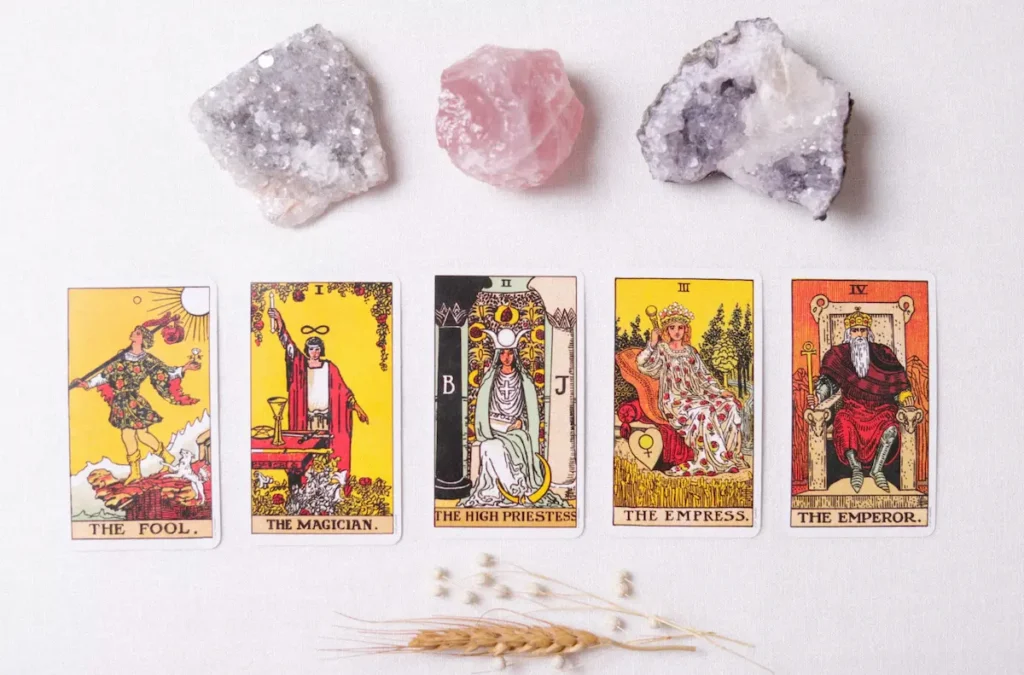
19. Tarot/Oracle Cards
Tarot and oracle cards are among the most widely used spiritual tools for self-reflection and guidance. They offer a structured way to access intuition through symbolic imagery. Tarot follows a fixed system of 78 cards with established meanings, while oracle decks are more flexible, often designed around a specific theme or intention.
With that, neither requires you to “believe” in prediction. Many practitioners view the cards less as fortune-telling and more as a mirror, prompting reflection on situations you’re already subconsciously processing. In fact, the imagery itself matters more than people expect. A deck that visually resonates with you tends to produce more intuitive, meaningful readings than one chosen for its reputation alone.
Try This: Choose a deck based on imagery that genuinely draws you in, rather than popularity or reviews. Start with simple one-card daily pulls to build familiarity before attempting more complex, multi-card spreads.
20. Shamanic Journeys
Shamanic journeys are guided spiritual experiences designed to access non-ordinary states of consciousness. They are often used to connect with spirit guides, inner wisdom, or deeper layers of the self not easily reached through waking awareness. Rhythmic sound, particularly drumming or rattling, is traditionally used to guide the mind into this altered state.
Plant medicine is sometimes associated with shamanic practice, but it isn’t a requirement. Many journeys are entirely sound and breath-based, making this spiritual tool more accessible than its reputation might suggest. As with breath work, the intensity of a shamanic journey can vary considerably, so understanding what a specific practitioner or format involves beforehand is worth doing.
Try This: Look into sound-based or breath-based shamanic journeying first if plant medicine isn’t something you’re drawn to. Whichever format you choose, working with an experienced guide is strongly recommended for a first journey.

21. Colour Therapy
Colour therapy is based on the idea that different colours carry distinct vibrational frequencies capable of subtly influencing mood, energy, and consciousness. Because colour surrounds us constantly, through clothing, lighting, and our environment, this is one of the more effortless spiritual tools to incorporate into daily life without setting aside dedicated practice time.
Each colour is generally associated with a specific quality or chakra. For example, red is often paired with grounding and vitality, green with balance and the heart, blue with calm and clear communication. Rather than committing to one colour permanently, many practitioners choose intentionally, shifting colour choices day to day based on whatever quality they most need support with.
Try This: The simplest way to begin is through the clothing you wear. Identify which area of your life feels most in need of support right now, then choose a colour aligned with that theme. Take time to notice any shift over the day.
22. Aura Readings
An aura reading interprets the subtle energy field believed to surround the body, offering insight into physical, emotional, mental, and spiritual states. Some practitioners perceive auras intuitively, while others rely on tools like Kirlian photography, which captures a visual representation of this energy field on camera.
Colour is often central to aura interpretation. Different tones and hues in the image or reading corresponding to different states, similar in spirit to colour therapy above. Though the two work in different directions, one reflects your current energy back to you, the other lets you consciously shape it. Many people first become curious about this spiritual tool after childhood experiences of instinctively “sensing” energy or colour around others, without having a name for it at the time.
Try This: Aura photography is one of the most accessible and beginner-friendly ways to explore this practice, since it doesn’t require you to interpret anything intuitively yourself. If a session isn’t available nearby, intuitive reading or working with a pendulum can offer an alternative starting point.

23. Pendulum Dowsing
Pendulum dowsing involves observing the movement of a suspended pendulum, swings, circles, or stillness, to receive clear yes-or-no answers to specific questions. As one of the more logical, structured spiritual tools on this list, it appeals particularly to those who want a tangible, repeatable method rather than relying purely on intuitive feeling.
Establishing a consistent “vocabulary” with your pendulum is an important first step. For example, this means confirming what movement represents “yes,” “no,” and “unclear” before asking any real questions. Maintaining a neutral, unattached mindset while asking is also considered essential. This is because consciously or unconsciously influencing the pendulum’s movement is one of the most common pitfalls for beginners.
Try This: Hold the pendulum by its chain or string so it can swing freely, and use a simple object, such as a small crystal, to begin. Establish your yes, no, and unclear movements first. Then ask a neutral test question before moving on to anything more meaningful.
24. Spiritual Literature
Spiritual literature offers language, context, and validation for experiences that can otherwise feel confusing or isolating, especially early in a spiritual awakening. In fact, reading about others’ journeys often normalises what you’re going through. It can also introduce frameworks or terminology that make your own experience easier to articulate.
Some books lean more channelled or intuitive in style, while others take a more structured, teaching-based approach. Usually, it’s worth sampling a few different voices, including reader-favourite starseed books, to find what resonates. Many people also find that certain books seem to arrive at exactly the right moment in their journey. This phenomenon is often described as being intuitively guided toward the right material at the right time.
Try This: Popular authors in this space include Dolores Cannon, Barbara Marciniak, Amorah Quan Yin, Rebecca Campbell, and Radhaa Nilia. They are a good starting point if you’re new to spiritual reading, especially for New Age spirituality and the starseed movement.
25. Spiritual Mentorship
Some individuals are naturally more attuned to intuitive insight and energetic guidance, often through years of their own inner work. These mentors (or lightworkers) dedicate themselves to supporting others as they awaken to their purpose. They act less as a source of answers and more as a mirror, reflecting back what a person already senses but hasn’t yet learned to trust.
Mentorship can take many forms, one-on-one sessions, group circles, or ongoing informal guidance. Moreover, different formats suit different stages of a spiritual journey. As with several other spiritual tools on this list, discernment matters here more than almost anywhere else. This is largely because vulnerability involved in spiritual mentorship can unfortunately attract those with poor intentions alongside genuine, experienced guides.
Try This: Look for a mentor whose energy feels calm, grounded, and genuinely supportive, rather than someone who creates urgency or dependency. Trust your own judgement, if something feels off, it’s fine to step back, regardless of their reputation or credentials.
FAQ: Spiritual Tools for Awakening
What are spiritual tools for awakening?
Spiritual tools are practices, objects, or techniques used to support inner growth, intuition, and connection to your higher self. They range from tangible items like crystals and essential oils to practices like meditation and breath work. Moreover, whilst perfect alone, these tools are often used in combination.
How long does it typically take to feel results from this spiritual awakening?
Results vary depending on consistency, with many noticing subtle shifts within days or weeks. However, deeper transformation through spiritual awakening tends to build over months and years.
Can spiritual tools be combined, or should they only be used individually?
The choice ultimately remains with you. Many of these tools do go well together, for example, meditation with sound frequencies, or crystals with chakra work. However, you can just as easily use one at a time, or stick with only one if that works best for you.
Are there any risks or precautions I should know when using these tools?
Most spiritual tools are safe, but personal sensitivity and intention matter. Cleanse your space, protect your energy, and start gradually to avoid overwhelm. If a particular tool ever feels overwhelming or unsettling, it’s fine to pause and return to it later. You also don’t need to use it at all.
How do I know which spiritual tools are right for me?
Trust your intuition and explore different tools to see what resonates. There’s no harm in trying several, even all of them, to find your own combination. What supports the spiritual awakening of one person may not work as well for another. Give yourself permission to experiment freely.
Cosmic Closure
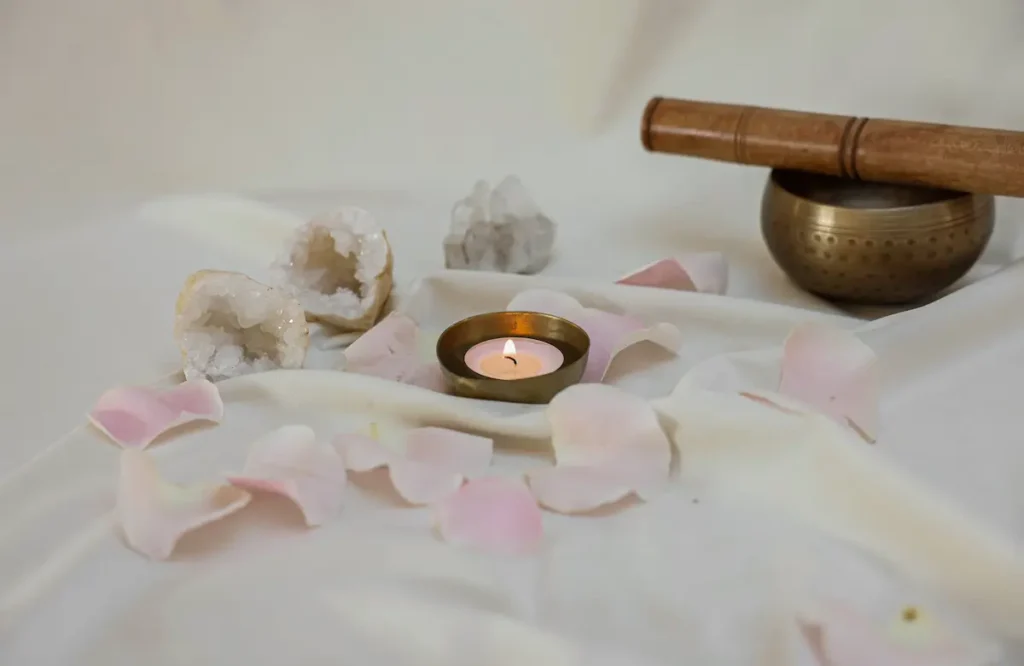
Ultimately, spiritual tools are a powerful resource for anyone seeking to deepen their connection to themselves and the world around them. Crystals, sound frequencies, colour therapy and other practices help purify your energetic imprint. They act to enhance both the sending and receiving of these subtle insights. Most of us, shaped by modern lifestyles, aren’t naturally attuned to soft thoughts and intuition and rewriting these pathways can take time. Consistently using spiritual tools can meaningfully accelerate the process, making the journey to greater awareness smoother and more accessible.