The starseed movement is entering a fascinating time, with people discovering new soul lineages more readily than ever before. However, with so many breakthroughs in recent years, it can start to feel as though these new starseeds are everywhere. Yet just as people do not distribute evenly across Earth’s ethnicities, we cannot expect soul lineages to represent themselves equally across the planet. Some origins naturally incarnate in greater numbers due to collective timing and mission focus. Others remain far less common, appearing only occasionally in physical form. Therefore, this article explores the top five most uncommon soul origins on Earth and why they qualify as rare starseeds.
Let’s check out if we could have a bit of “rare starseed” in us!
Understanding the Concept of Rare Starseeds
Within the starseed movement, not all soul lineages are equally represented on Earth. Some lineages, often referred to as “core starseeds”, appear in greater numbers due to long-standing connections with our planet. These include the starseed lineages most commonly associated with the starseed movement, such as the Pleiadians and Arcturians. On the other hand, there are many other soul origins that are far less common. These souls are often called “rare starseeds” because they incarnate infrequently and carry very specific missions or appear at pivotal moments in planetary evolution. Moreover, some lineages exist so far removed by time, distance, or dimension that they leave only subtle echoes of their influence on Earth today.
Nonetheless, rare starseeds are also unique in more than just their incarnation numbers. They tend to carry distinct energy signatures, personality traits, and spiritual abilities that set them apart from more commonly incarnation starseed types. Their rarity also often means their impact is highly focused, compared to more common starseed lineages. They may catalyse change, guide communities, or support planetary growth in ways that require extreme precision in timing and intention. Consequently, these starseeds are often a “once in a lifetime” type of person.
Therefore, understanding what makes a starseed “rare” helps to clarify why some lineages are more prominent while others appear only occasionally. It’s not simply about frequency—it’s about purpose, timing, and mission alignment. As a result, we can better appreciate why these souls are so uncommon, and why their presence is both significant and powerful.
To find out everything you need to know about starseed types and origins, make sure to read our complete guide.
Discover Your Starseed Personality✨
Take our FREE quiz to discover your unique cosmic personality and gain clarity on your strengths, relationships, and soul mission. Unlock the starseed lineage that aligns with who you truly are.
Top 5 Rare Starseed Lineages
Before we dive into the top five most uncommon soul origins, it’s important to clarify that the following five examples serve as categories illustrating the different ways a starseed can be rare. As we’ve discussed, rarity depends on multiple factors. These range from the soul’s mission, the number of starseeds available to incarnate (original population size), compatibility with life on Earth, dimensional distance (including time), and overall interest in our planet. Therefore, the following starseeds are a prime example of each of these categories.
1. Angelic Starseeds (Soul Mission)
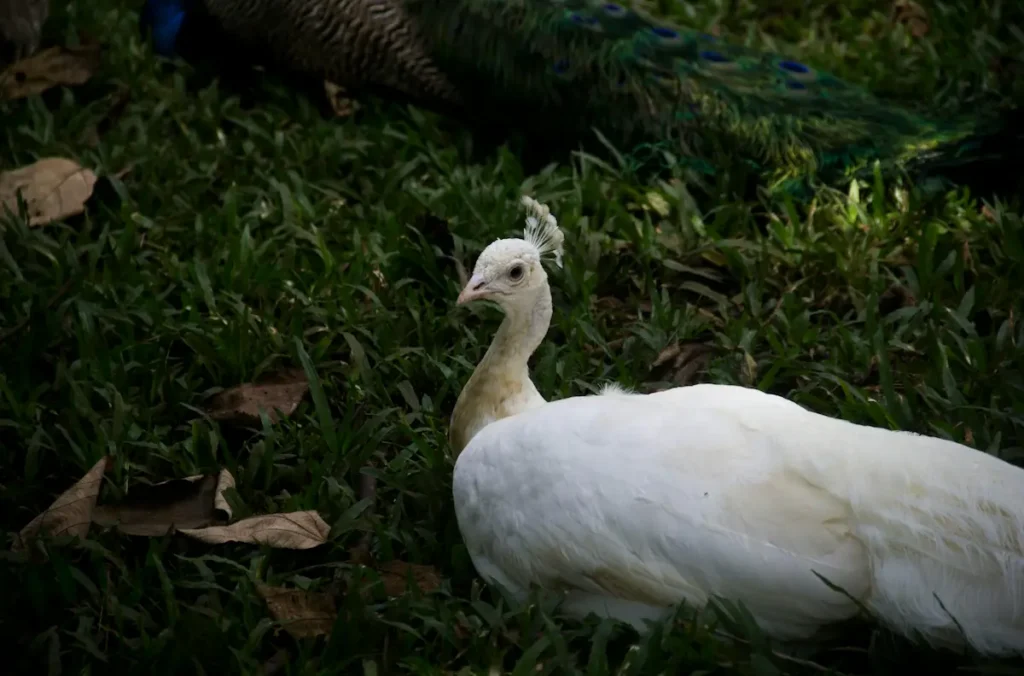
Angelic starseeds are a perfect example of rarity based on soul mission. While everyone within the starseed movement has heard of them, very few truly understand just how rare these souls are. Angelic starseeds appear perhaps once in a generation, or even once per several. Their impact on Earth tends to be extraordinary, influencing millions and shaping consciousness for centuries. As a result, Angelic starseeds are usually the prophets, spiritual leaders, and humanitarian visionaries whose work resonates long after their lifetime. They incarnate with a singular, distinct mission, and rarely combine with other lineages. They also accomplish precisely what they are meant to during their lifetime, and then do not reincarnate. Moreover, a new Angelic starseed emerges only when the timing is right for another soul of this magnitude to appear on Earth.
Finally, because humanity does not require individuals capable of such profound impact every day, Angelic starseeds are extraordinarily rare. It’s likely that most of us reading this blog will never meet one. In fact, an Angelic starseed would probably not read this blog. They know their life path from birth, understand their purpose completely, and dedicate every moment to fulfilling it. I.e. they have bigger fish to fry.
Thinking you might be an Angelic starseed? See our full guide on Angelic origins, soul mission and signs you may carry this incredible lineage.
2. Denebian Starseeds (Original Alien Population)
With this category, it is important to note that not all alien races ascend spiritually at the same rate. In fact, many are still developing—or have only recently developed—the capacity to starseed. This means that some starseed lineages are so early in their inter-dimensional relationships that they simply do not have that many souls to send out to incarnate. Moreover, total alien population size also plays a role. While the home worlds of some lineages span multiple planets or even constellations, others occupy only a single world—much like humans on Earth. As a result, once again, the fewer the population, the fewer the souls available to starseed, the fewer incarnates appear on Earth.
Consequently, a prime example of rarity based on small original population are Denebian starseeds. Their civilisation was minor and short-lived, originating from a single planet orbiting a lone star, much like Earth around the Sun. Due to the brevity of their star’s lifespan, their society was pressured to develop rapidly, guided by interactions with other starseed lineages. As a result, their population never became large, and only recently did they achieve the ability to ascend and send starseeds. Therefore, Denebian incarnates on Earth are, understandably, extremely rare.
Yet, scarcity does not mean insignificance. Although Denebian incarnates are infrequent and often small in number, they frequently recur across multiple lifetimes, typically as a secondary or blended lineage. While not usually defining the soul’s primary mission, Denebian qualities—values like “seize the day,” joy, and humour—ripple subtly through both starseed and non-starseed society. They manage to leave an outsized imprint despite their limited numbers.
Maldekians are another displaced lineage occurring in small numbers on Earth. Make sure to check out our complete guide to Maldek starseeds.
3. Void Starseeds (Extreme Otherness)
Void starseeds represent a category of beings that exist almost entirely beyond human comprehension. By definition, they are entities whose essence resides in the vast spaces between stars, inhabiting the cosmic “nothingness” that lies beyond material and dimensional form. These beings are so radically different from humans and familiar starseed lineages that their very nature challenges conventional understandings of life and consciousness. In many ways, they are more accurately described as Void beings—ancient, enigmatic, and so far removed that the concept of sending starseeds may not even apply.
When a being is so utterly alien, its experiences often hold little meaning or relevance to humanoid consciousness. To illustrate, starseeding itself—souls moving between bodies—is already an extraordinary concept, but most lineages involve humanoid-to-humanoid incarnations, creating a baseline of comprehensible experience. Void beings, by contrast, could exist in forms or states that are inconceivable to humanoids—such as pure energy, gas, or entirely non-material consciousness. The nature of such existence is fundamentally different, making direct comparison or understanding nearly impossible.
As a result of this extreme otherness, there are no known Void starseeds. Their existence remains largely theoretical, and if they do interact with physical or humanoid realms, it is likely in ways that are imperceptible. In many respects, even the term “starseed” is misleading when applied to Void beings. They are so far removed from the conventional process of humanoid starseeding that the concept cannot adequately describe their existence, leaving them as some of the most mysterious and enigmatic presences in the cosmos.
4. Tau Cetian Starseeds (Dimensional Distance)
Next, when considering rarity based on dimensional distance, Tau Cetian starseeds are a perfect example, particularly in the fourth dimension—time. Known as one of the galaxy’s oldest civilisations, they are thought to have developed alongside, or even before, the Arcturians, widely regarded as the oldest galactic civilisation. Primarily aquatic or water-based, Tau Cetians are also said to have achieved technological and spiritual ascension billions of years ago. As a result, there is almost no current evidence of their civilisation existing on a physical or temporal plane.
Furthermore, because of their immense age, very little is known about them. This is not only on Earth, but even among other starseed lineages. In fact, Tau Cetians appear in the mythology of other civilisations, including the Arcturians and Andromedans, much like how these lineages have influenced early Earth societies. Their presence may have subtly influenced the populations of other starseeds, but the vast distances in time make direct incarnations on Earth extremely uncommon. When they do occur, it is usually within highly ancient or deeply blended souls. These starseed continue to carry faint but recognisable traces of Tau Cetian qualities.
To better understand how these energetic planes influence incarnation, check out our full guide to starseed dimensions.
5. Alpha Centaurians (Interest in Earth)
Finally, an ideal example of a lineage that, despite having every possible advantage, shows no interest in Earth are the Alpha Centaurians. At first glance, they would seem perfect candidates for star seeding. Their system is the closest to our Sun, their civilisation on Proxima Centauri is extensive, advanced, and long-lived, and they exist on some of the same dimensional planes as Earth. Yet, despite of all these head starts, they have produced little to no starseeds for our planet.
The reasons lie in their fundamental differences. Firstly, Alpha Centaurians are believed to be non-humanoid. This makes the human experience irrelevant or unappealing to them—much as humans would not choose to experience life as a dolphin. Secondly, their society operates on a much slower timeline due to their longevity, making short-term actions and rapid planetary engagement difficult to relate to. As a result, they prioritise internal stability, prosperity, and long-term planning over interaction with other civilisations. Because of these factors, there is simply no perceived need for this culture to starseed. Any incarnations on Earth would be extremely rare, accidental, or experimental, and repeat incarnations are virtually non-existent.
To learn more about how starseeds are created, make sure to have a look at our full guide.
FAQ: Top 5 Rare Starseed Lineages
Q1. Does distance play a role in a starseed’s likelihood to incarnate on Earth?
Yes, is does. Both physical distance (how far their home star system is) and dimensional distance (how far removed they are in energy, frequency, or time) can influence whether a starseed can or chooses to incarnate. The farther removed a lineage is, the rarer incarnations tend to be.
Q2. Does it matter if a starseed is humanoid or non-humanoid?
Yes, it does. Humanoid forms are much more compatible with Earth’s physical and societal environment. Non-humanoid beings, or those vastly different from humans, are less likely to incarnate. This is because the experience of life on Earth would be difficult, irrelevant, or impossible for them.
Q3. Do all alien races in the galaxy incarnate as starseeds?
It depends on their preference. Some alien races incarnate physically as starseeds, directly experiencing human life. Others influence Earth indirectly through messages, ideas, visions, or inspiration, without physically incarnating. Some do both, and some have no interaction with Earth as well.
Q4. Can a rare starseed lineage ever blend with other lineages?
Yes, they can. Some lineages, like Angelic starseeds, tend to incarnate alone due to the singularity of their mission. Others, such as those with smaller populations like the Denebians, often appear in blended or secondary incarnations. This allows their unique energies to still influence Earth even if the lineage is too small to manifest alone.
Q5. Are rare starseeds more likely to appear during specific eras or events?
Yes, they do. Many rare starseed lineages incarnate based on cosmic timing, planetary needs, or global soul shifts. Their appearances often align with pivotal periods in human history, major spiritual transitions, or moments when their particular mission can have the greatest impact.
Cosmic Closure
In the vast tapestry of the cosmos, rare starseeds demonstrate that souls do not appear equally on Earth. Some incarnate to fulfil singular missions, others encounter limits from population or biology, and some exist so far beyond human experience that their presence is almost incomprehensible. While encounters with these rare starseeds are extraordinary and often fleeting, their influence—whether direct, blended, or energetic—ripples across generations, shaping consciousness, culture, and the evolution of humanity in ways that are subtle yet profound. Understanding these rare lineages not only deepens our appreciation of the starseed movement, but also highlights the extraordinary diversity of souls exploring life on Earth.
This guide to rare starseeds is only the beginning. Dive deeper into the fascinating world of starseeds and their influences across the planet with our other guides.
- What are Indigo Starseeds? Understanding the Origins
- Starseed Birth Chart: A Zodiac-Style Guide to Your Lineage
- Starseed Birthmarks: Everything You Need to Know
Curious which starseed you are? The Starseed Personality Assessment gives you 12 insightful questions to explore your natural traits and dominant lineage — completely free.