
Chakra balancing is the practice of bringing your seven energy centres back into harmony. When they flow freely, many people feel grounded, creative, and clear. When they are blocked, life can feel heavy, scattered, or out of tune. This guide explains what chakra balancing is, where it comes from, and how to balance your chakras with simple practices. It also covers what a session feels like and what it costs, so you can begin with confidence.
Let’s bring your energy back into balance.

What Is Chakra Balancing?
Chakra balancing is a spiritual practice that restores the flow of energy through the body’s seven main energy centres, called chakras. Using meditation, breath, movement, sound, touch, or intention, it aims to release blocked energy and bring each chakra into harmony.
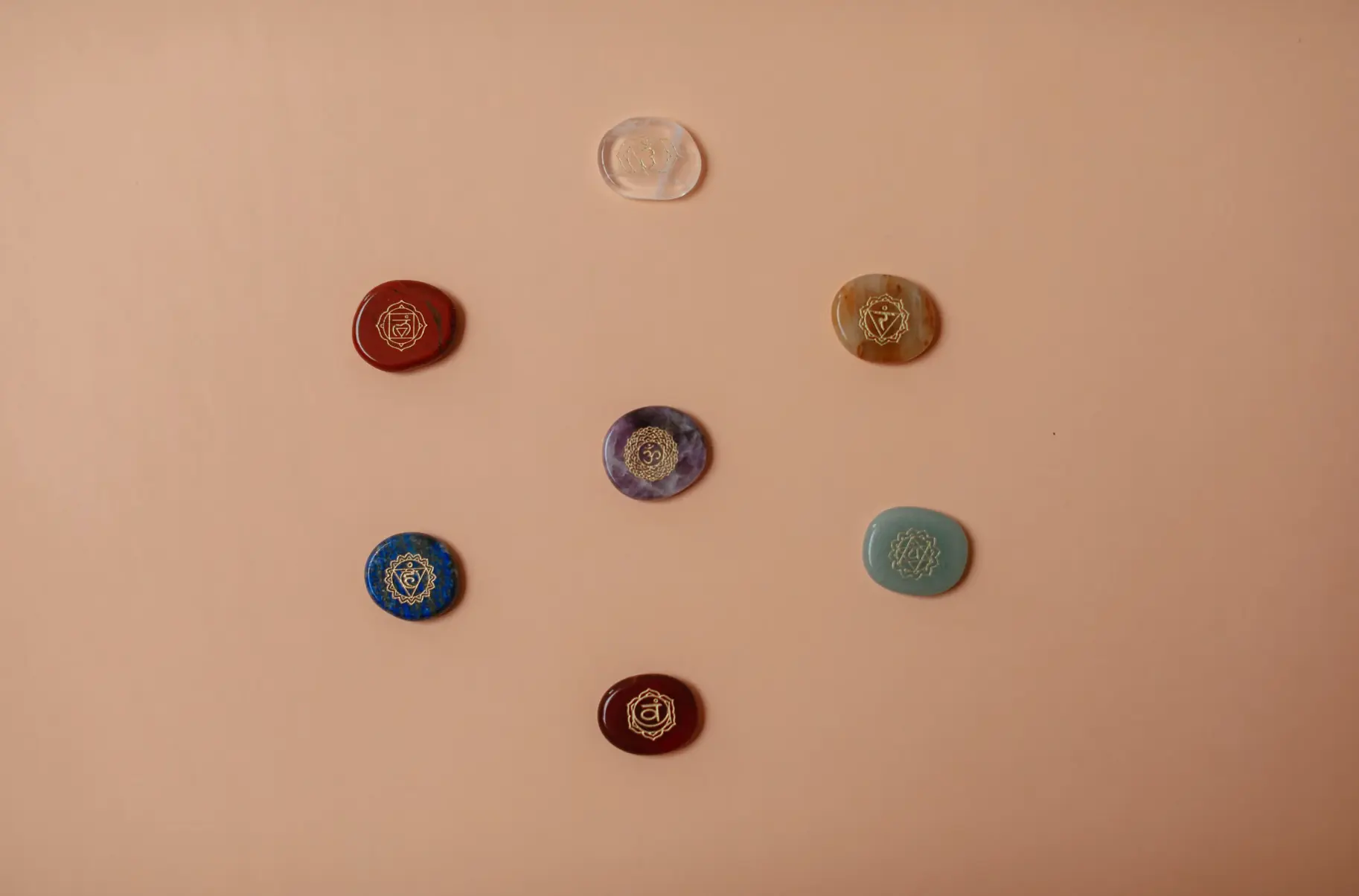
The word chakra comes from Sanskrit and means wheel or disk. In yogic and tantric teachings, seven main chakras run along the spine, from its base to the crown of the head. Moreover, each chakra is linked to a colour, an element, and an area of life. When energy moves freely through them, a person is said to feel grounded, expressive, and connected. In contrast, when a chakra is blocked or overactive, that part of life can feel stuck.
Here is where each of the seven chakras sits and what it governs:
- Root chakra: safety, stability, and belonging
- Sacral chakra: creativity, pleasure, and emotion
- Solar plexus chakra: confidence and personal power
- Heart chakra: love, compassion, and forgiveness
- Throat chakra: truth and self-expression
- Third eye chakra: intuition and insight
- Crown chakra: spiritual connection and purpose
Ultimately, chakra balancing is the work of tending all seven. It can be a quiet practice at home or a guided session with a practitioner. Many people begin with chakra balancing meditation or yoga, while others prefer chakra balancing massage or a full treatment session. Whatever the form, the aim stays the same: a steady, open flow of energy through the whole system.
Chakra is not the only Sanskrit word at home in modern spirituality. Have you ever wondered what the akashic records are, and why they are named for space itself?
Where Chakra Balancing Comes From
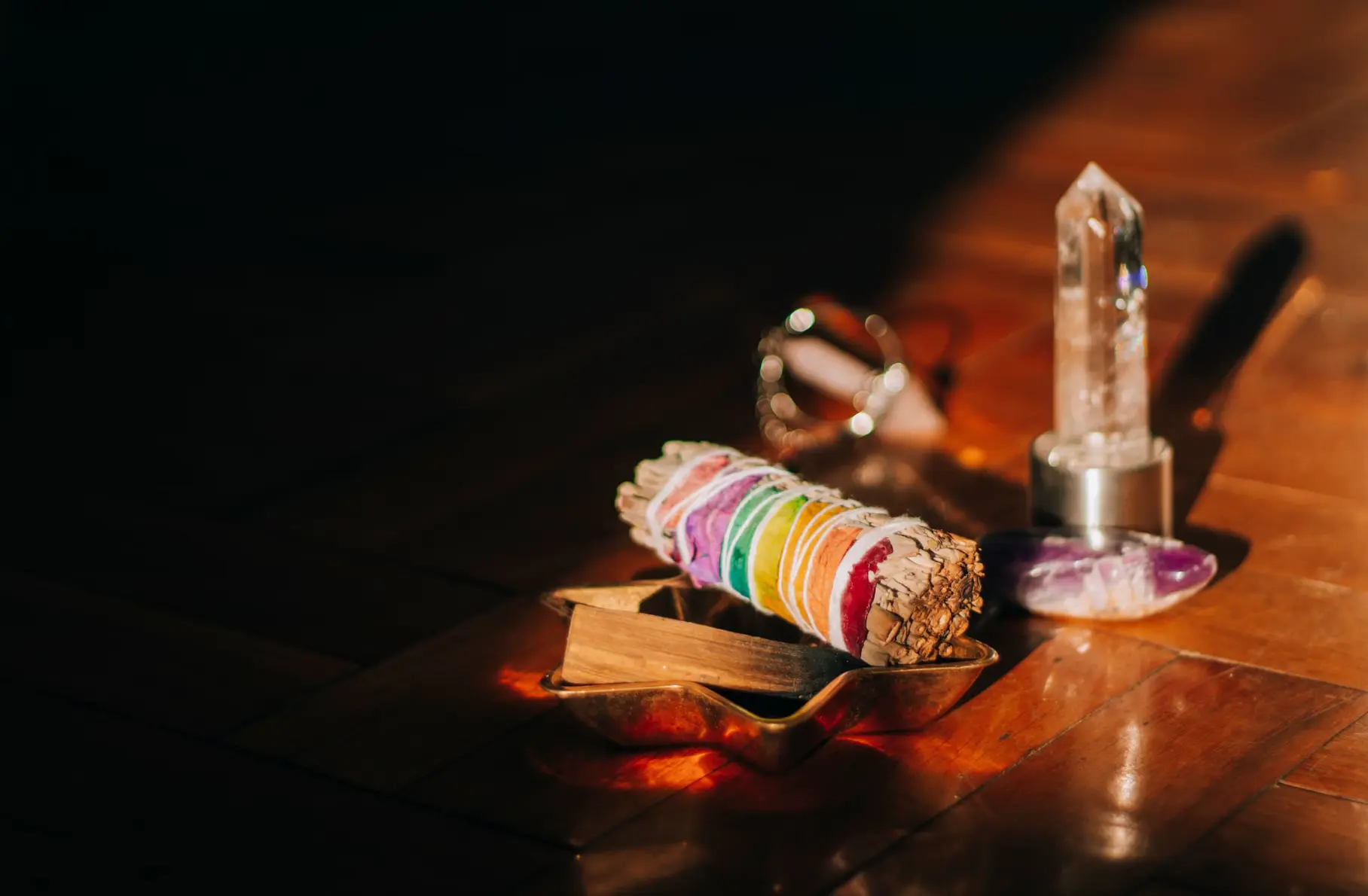
Chakra balancing grows out of ancient Indian yogic and tantric traditions. Specifically, early Sanskrit teachings use the word chakra, meaning wheel, for meditative visualisations of flowers and mantras. Over the centuries, Hindu and Buddhist teachers mapped these centres within the body, though their counts differ. Many Buddhist texts describe five chakras, while Hindu sources describe six or seven. Nonetheless, the modern Western picture took shape from the 1880s, beginning with Theosophists such as Helena Blavatsky. Furthermore, Sir John Woodroffe’s 1919 book The Serpent Power and Charles Leadbeater’s 1927 book The Chakras shaped the version known today. Finally, rainbow colours and many other correspondences were added later. It is this particular blend of old and new that makes up a fascinating part of this practice’s living story.

What Does Your Energy Say About You?✨
Your chakras reflect how you feel right now, but your soul may carry an older story. Take the free Starseed Personality Quiz for 12 insightful questions that reveal your natural traits and dominant lineage in just a few minutes.
What Does Chakra Balancing Do?
Chakra balancing is believed to clear stagnant energy and restore a steady flow through all seven centres. Many people describe the result as feeling lighter, calmer, and more like themselves. Moreover, each chakra governs a different area of life, so the effects often show up in many places at once. Here is what people most often notice:
- A calmer, easier evening. Settling the root and crown chakras is said to help you wind down faster after a busy day. People describe a quieter mind at bedtime and less replaying of the day.
- Steadier emotions. An open sacral chakra lets feelings move through you, instead of building up until you snap at something small.
- Confidence in decisions. A balanced solar plexus is said to quiet second-guessing. Choices at work and at home feel clearer and easier to stand behind.
- Easier, more honest conversations. Open throat and heart chakras are said to help you say what you mean, set a boundary kindly, and feel safe receiving love.
- Energy and direction. Many people describe a flat, stuck feeling lifting. Creativity, motivation, and a sense of purpose return, which is where the third eye comes in.
Over time, regular practice is said to sharpen your awareness of when something feels off, so you can respond early. As such, it is a gentle form of self-care that works on mind, body, and spirit together.
Chakra balancing is just one way to feel calmer, clearer, and more like yourself. Explore 25 more spiritual tools for grounding, intuition, and inner peace.

Signs Your Chakras May Be Out of Balance
A chakra can fall out of balance in two ways. Firstly, it can be blocked or under active, so too little energy flows through it. Secondly, it can be overactive, so too much energy pushes through. Both feel uncomfortable, and they often show up as familiar patterns in your daily life. As such, it is important to notice which of these feel true for you.
Root Chakra
- Blocked or underactive: Feeling unsafe, anxious about money or home, or ungrounded.
- Overactive: Rigid habits, hoarding, or resisting any change.
Sacral Chakra
- Blocked or underactive: Creative blocks, numb feelings, or little desire or joy.
- Overactive: Emotional swings, overindulging, or needing others for pleasure.
Solar Plexus Chakra
- Blocked or underactive: Low self-esteem, indecision, or people-pleasing.
- Overactive: Controlling, quick to anger, or demanding perfection.
Heart Chakra
- Blocked or underactive: Loneliness, guardedness, or trouble forgiving.
- Overactive: Jealousy, clinginess, or giving until you are drained.
Throat Chakra
- Blocked or underactive: Fear of speaking up, shyness, or swallowing your words.
- Overactive: Talking over others, bluntness, or not listening.
Third Eye Chakra
- Blocked or underactive: Doubting your intuition, foggy thinking, or no sense of direction.
- Overactive: Overthinking, a racing mind, or living in daydreams.
Crown Chakra
- Blocked or underactive: Feeling cut off, purposeless, or cynical.
- Overactive: Feeling detached from daily life, or aloof from other people.
In general, most people notice signs in more than one chakra, and the pattern shifts from day to day. In fact, traditional teachers describe the chakras as a flowing system, not seven separate switches. That is why balancing works best when you tend all seven together, even if one stands out.
Crystals are said to hold onto heavy energy, just as blocked chakras do. Learn how to cleanse and charge your crystals so they are ready to support you.
How to Balance Your Chakras
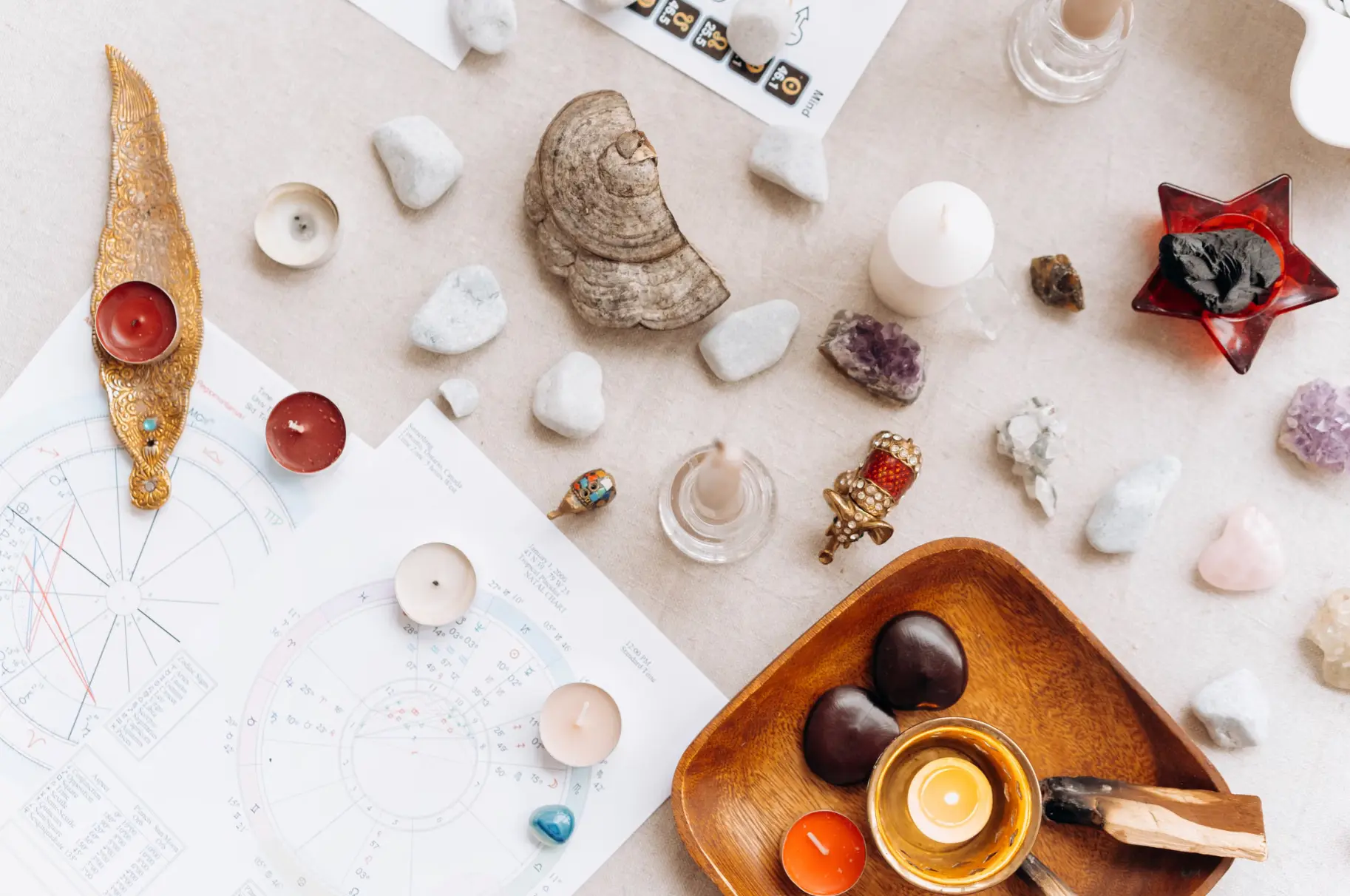
There is no single right way to balance your chakras. The best method is the one you will keep returning to. Traditional teachers add one important note: tend all seven together, even when one stands out. Energy moves through the whole system, so caring for one chakra usually helps its neighbours too. Choose one or two methods below and let your practice grow from there.
1. Chakra Balancing Meditation
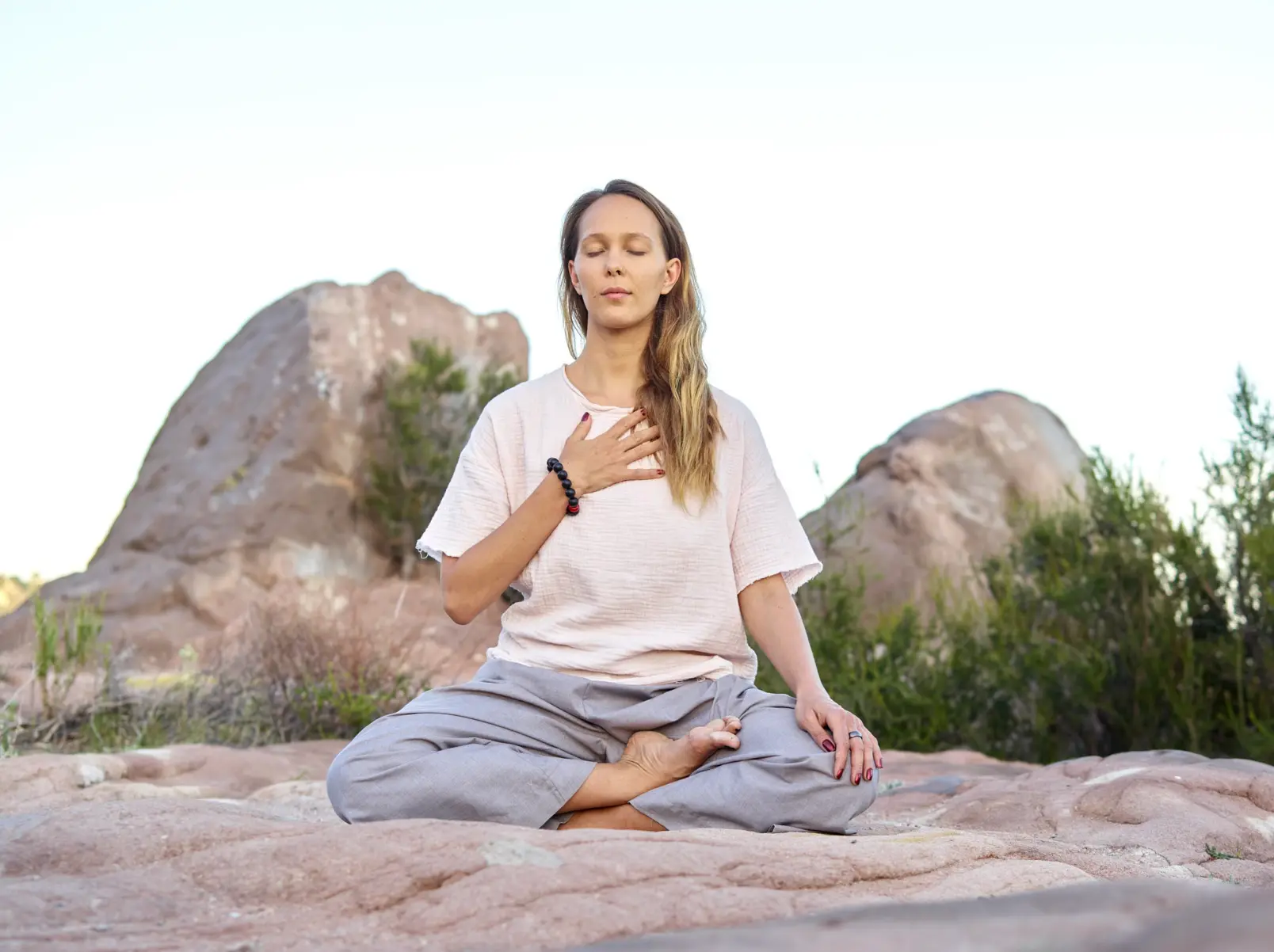
Meditation is the most common place to begin. Sit comfortably and close your eyes. Starting at the root, picture each chakra as a glowing wheel in its colour: red, orange, yellow, green, blue, indigo, then violet or white. Breathe into each one for a minute or two. Let the colour brighten as you inhale and any heaviness clear as you exhale.
2. Chakra Balancing Yoga
Each chakra has poses said to open its area. Hold each one for about five breaths.
- Root: Mountain pose or Warrior I
- Sacral: Bound angle pose or Goddess pose
- Solar plexus: Boat pose
- Heart: Camel pose or Bridge pose
- Throat: Fish pose or Shoulder stand
- Third eye: Child’s pose or Forward fold
- Crown: Savasana
Moving through them in this order makes a gentle flow of about fifteen minutes.
3. Breathwork
Slow breathing steadies the mind and makes it easier to feel your energy move. Try alternate nostril breathing, traditionally said to balance the flow of energy. Close your right nostril and inhale through the left. Close the left and exhale through the right. Inhale through the right, then switch. Continue for five minutes.
4. Sound and Mantra
Each chakra has a seed sound, also known as a bija mantra. Specifically, they are LAM for the root, VAM for the sacral, RAM for the solar plexus, YAM for the heart, and HAM for the throat. Moreover, the third eye takes OM, while the crown takes OM or silence. Chant each one aloud or silently for a minute, feeling the vibration in that area. Singing bowls and tuning forks are also popular, since their tones are said to resonate with each centre.
5. Chakra-Inspired Massage
Touch brings attention, and energy, to a place that needs care. With that, try to place a hand over each centre and make slow, gentle circles. Use the soles of your feet for the root and your lower belly for the sacral. Next, use your upper belly for the solar plexus and the centre of your chest for the heart. Finally, use your throat, the space between your eyebrows, and your scalp for the last three.
6. Affirmations and Journaling
Each chakra is linked to a core belief. Rest a hand on the centre and repeat a short affirmation:
- Root: I am safe.
- Sacral: I welcome joy.
- Solar plexus: I trust myself.
- Heart: I give and receive love.
- Throat: I speak my truth.
- Third eye: I trust my inner knowing.
- Crown: I am connected to something greater.
Afterwards, write down whatever surfaced. Notably, patterns often appear over a few days.
7. Crystals
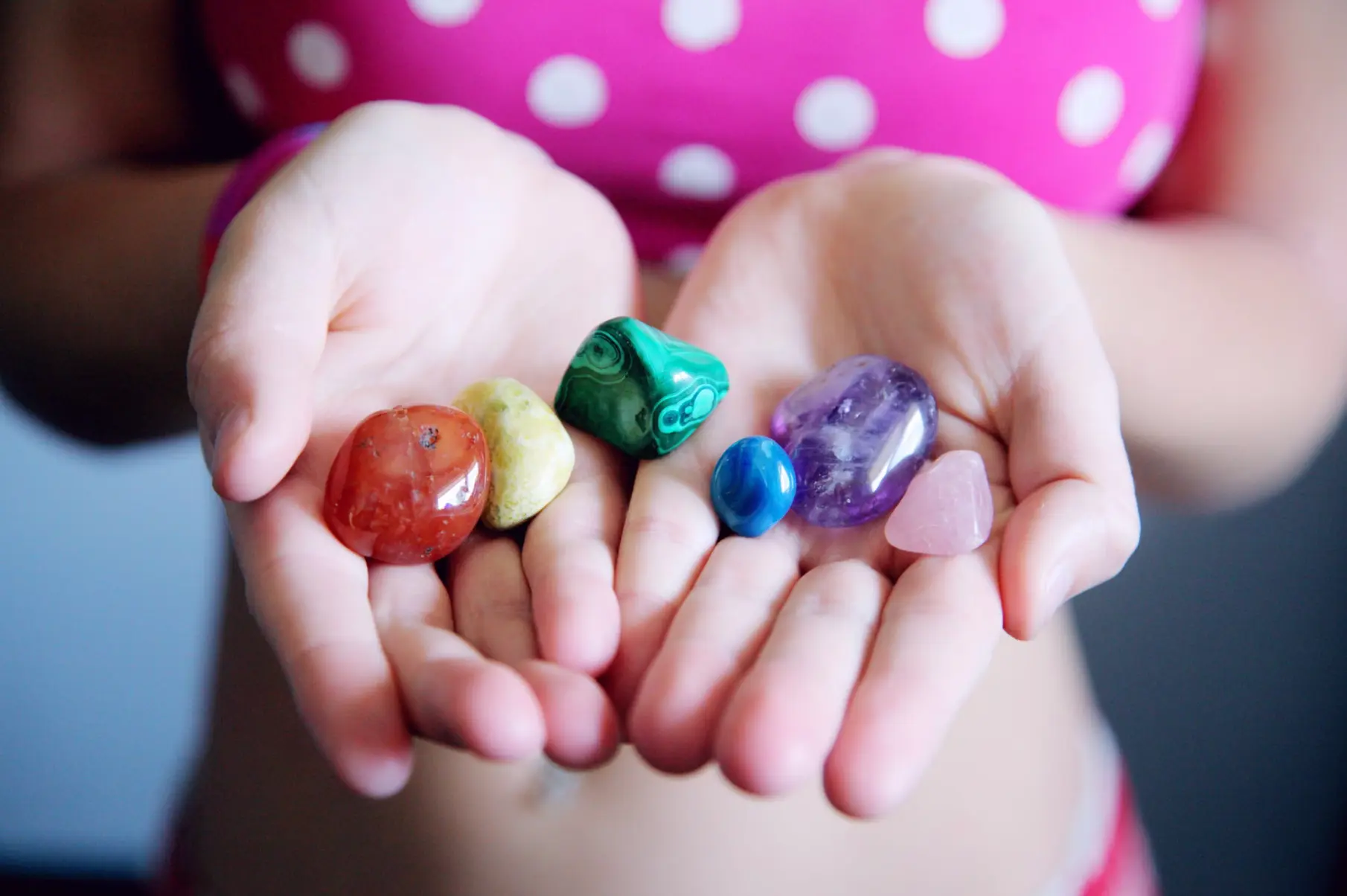
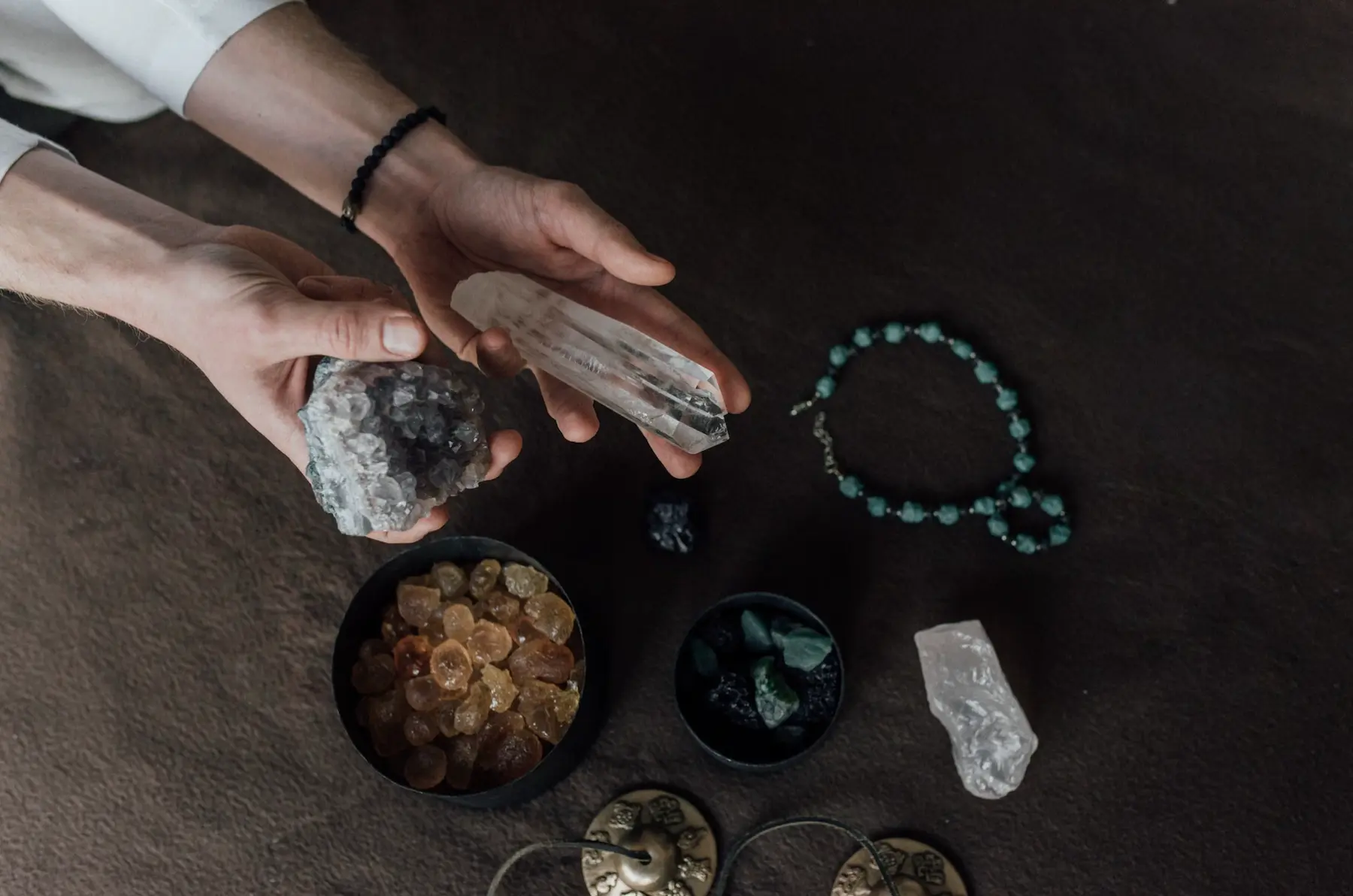
Natural stones, including crystals for starseeds, are matched to each chakra by colour. Specifically, red jasper or garnet suits the root, and carnelian suits the sacral. Citrine suits the solar plexus, while rose quartz or green aventurine suits the heart. Blue lace agate or sodalite suits the throat. Amethyst or lapis lazuli suits the third eye, and clear quartz or selenite suits the crown. Lie down and rest a stone on each centre for a few minutes while you breathe.
8. Pendulum
A pendulum is said to show how each chakra is flowing. With that in mind, hold it steady a few inches above each centre and ask it to reveal the energy. A smooth clockwise circle is read as open and flowing. On the other hand, a weak, stalled, or backward swing is read as blocked. Following this, make sure to support that chakra with one of the methods above. Finally, treat the pendulum as a gentle guide, not a final answer.
9. Reiki
Reiki uses gentle hands-on or hands-off touch to channel energy through the chakras. You can practise self-Reiki by resting your hands on each centre in turn, or receive a session from a practitioner. The section on Chakra Balancing vs. Reiki explains the differences.
Finally, you do not need to do all nine practices to balance your chakras. Find what suits you best, and dedicating a few minutes a day with one or two of them is enough to begin.
If your chakras keep falling out of balance, the cause may run deeper than daily life. Browse the guide to starseed origins and see which lineage resonates.

A Simple Chakra Balancing Routine for Beginners
This fifteen-minute routine brings together the methods above into one gentle flow. It works at home, needs no equipment, and suits anyone new to chakra balancing. Practise it three or four times a week at first, or daily if it feels good.
- Set the space (1 minute). Find somewhere quiet where you will not be disturbed. Dim the lights and silence your phone. If you like, cleanse the room with palo santo.
- Settle with your breath (2 minutes). Sit or lie down comfortably. Breathe in slowly for four counts and out for six. Let your shoulders soften with each exhale.
- Move through the chakras (7 minutes). Spend about one minute on each centre, starting at the root and rising to the crown. For each one, picture its colour glowing and spinning slowly. Chant its seed sound once or twice, and repeat its affirmation silently. Rest a hand on the area if that feels good.
- Linger where you are drawn (optional). If one chakra pulls your attention, stay a little longer. That is often the one asking for care. Then continue upward.
- Seal the practice (2 minutes). Place both hands over your heart. Breathe deeply and picture all seven colours shining together as one steady light. Rest in that feeling for a few breaths.
- Write it down (3 minutes). Keep a notebook nearby and jot down any feelings, images, or thoughts that came up. Patterns often become clear after a few sessions.
What you may notice: Many people feel a gentle warmth, a light tingling, or a deep calm. Others feel a quiet emotion rise and pass, or simply feel lighter afterwards. Every experience is valid. Afterwards, drink a glass of water and give yourself a few quiet minutes before returning to your day.
Chakra Balancing With a Practitioner
Many people enjoy learning at home first and then booking a session. A practitioner can guide your energy in ways that are hard to do alone, and the experience is often deeply relaxing.
What a Session Is Like
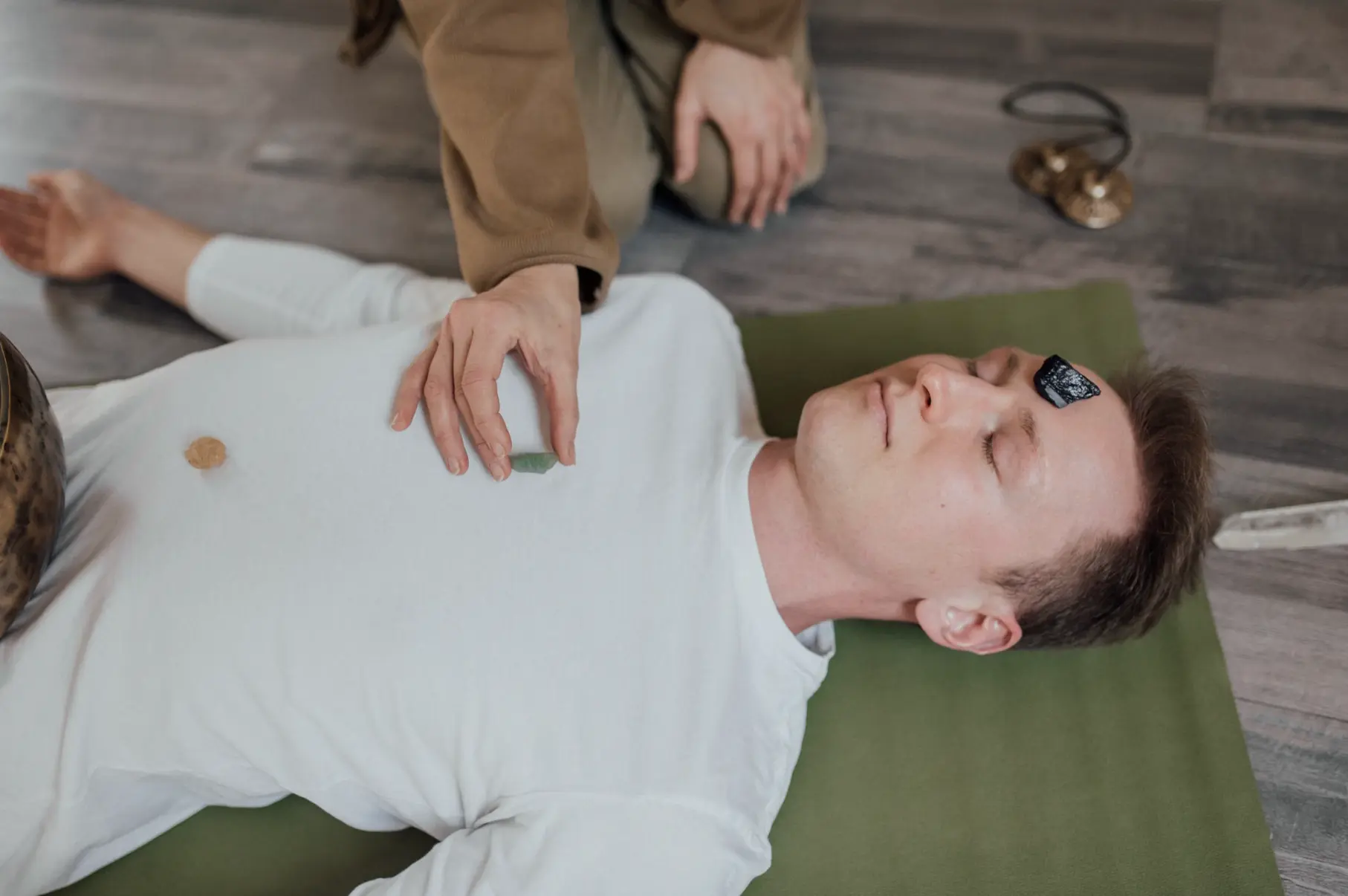
A session usually begins with a short chat about your intentions. You then lie down fully clothed, often on a massage table with a soft blanket. The practitioner moves through your chakras from root to crown. Depending on their style, they may use light touch, crystals, tuning forks, singing bowls, aromatherapy, or Reiki. Some therapists blend it with bodywork, which is sometimes called chakra balancing massage. Sessions typically last thirty to ninety minutes and close with a brief check-in.
What to Expect After Chakra Balancing
Many people feel calm, light, or sleepy afterwards. Some notice warmth, tingling, or a quiet wave of emotion. Drink water, rest if you can, and keep the rest of your day gentle. Journaling that evening often captures insights while they are fresh.
How Much Does Chakra Balancing Cost?
Prices in the United States vary with session length, the practitioner’s experience, and the city. These are typical ranges:
- 30 to 45 minutes: $50 to $90
- 60 minutes: $90 to $150
- 90 minutes: $130 to $200
- Premium studios or luxury spas: $150 to $250
- Distance sessions: $60 to $110
- Group classes and sound baths: $20 to $50
Packages of several sessions often lower the price by about ten to fifteen percent.
Choosing a Practitioner
Ask about their training and how they work. Notice how you feel in the first few minutes, since comfort matters. Be wary of anyone who pushes large packages or costly add-ons.
Chakra Balancing vs. Reiki
Chakra balancing and Reiki are both energy practices, and many practitioners offer them together. They have different roots and a different focus, so it helps to know how they compare.
- Focus: Chakra balancing tends the seven main energy centres along the spine. Reiki works with your whole energy field, without targeting any single centre.
- Origins: Chakra teachings come from ancient Indian yogic and tantric traditions. Reiki was developed in Japan in the early 1920s by Mikao Usui.
- Who does the work: Chakra balancing is easy to practise on your own. Reiki is traditionally given by a trained practitioner, though many people learn self-Reiki as well.
- Tools: Chakra balancing draws on colours, mantras, yoga, crystals, and visualisation. Reiki uses gentle hands-on or hands-off touch and focused intention.
- Experience: Chakra balancing is often active, because you visualise, chant, or move. Reiki is usually passive, as you lie back and receive.
The two blend naturally. A Reiki session often passes through each chakra, and many people use chakra balancing at home to keep that energy flowing between visits. Neither replaces the other. If you are new to energy work, begin with the simple practices above, then try Reiki when you want to be guided.
FAQ: Chakra Balancing
How do I know if my chakras are out of balance?
Notice where life feels stuck or too intense. Worry about safety points to the root, and creative blocks point to the sacral. A racing mind often points to the third eye. Trust what feels familiar, and use the signs above as a guide.
How can I balance my chakras myself?
Start with one simple method, such as meditation, yoga, breathwork, mantra, or crystals. Move gently from the root to the crown, spending a minute or two on each chakra. The fifteen-minute routine above is a good place to begin.
Can I balance all my chakras at once?
Yes, and traditional teachers recommend it. The chakras work as one flowing system, so caring for all seven keeps the energy even. If one stands out, spend a little extra time there.
How often should I balance my chakras?
Many people practise a few times a week, and some do a short version daily. Others add a monthly session with a practitioner. Choose a rhythm you can keep.
How much does chakra balancing cost?
Balancing your chakras at home is free. A session with a practitioner typically costs $90 to $150 for an hour in the United States, with premium studios reaching $250. The practitioner section above lists more ranges.
Final Thoughts
Chakra balancing is less about fixing yourself and more about listening. Your energy centres are always speaking through tension, held-back words, and moments of lightness. Balancing them is the simple act of paying attention and responding with care. You do not need special tools or perfect technique. A few quiet minutes of breath, colour, and intention is enough to begin. Over time, the practice becomes a gentle conversation with yourself. Start with one chakra, one method, or one fifteen-minute flow. Then let the energy show you where to go next.